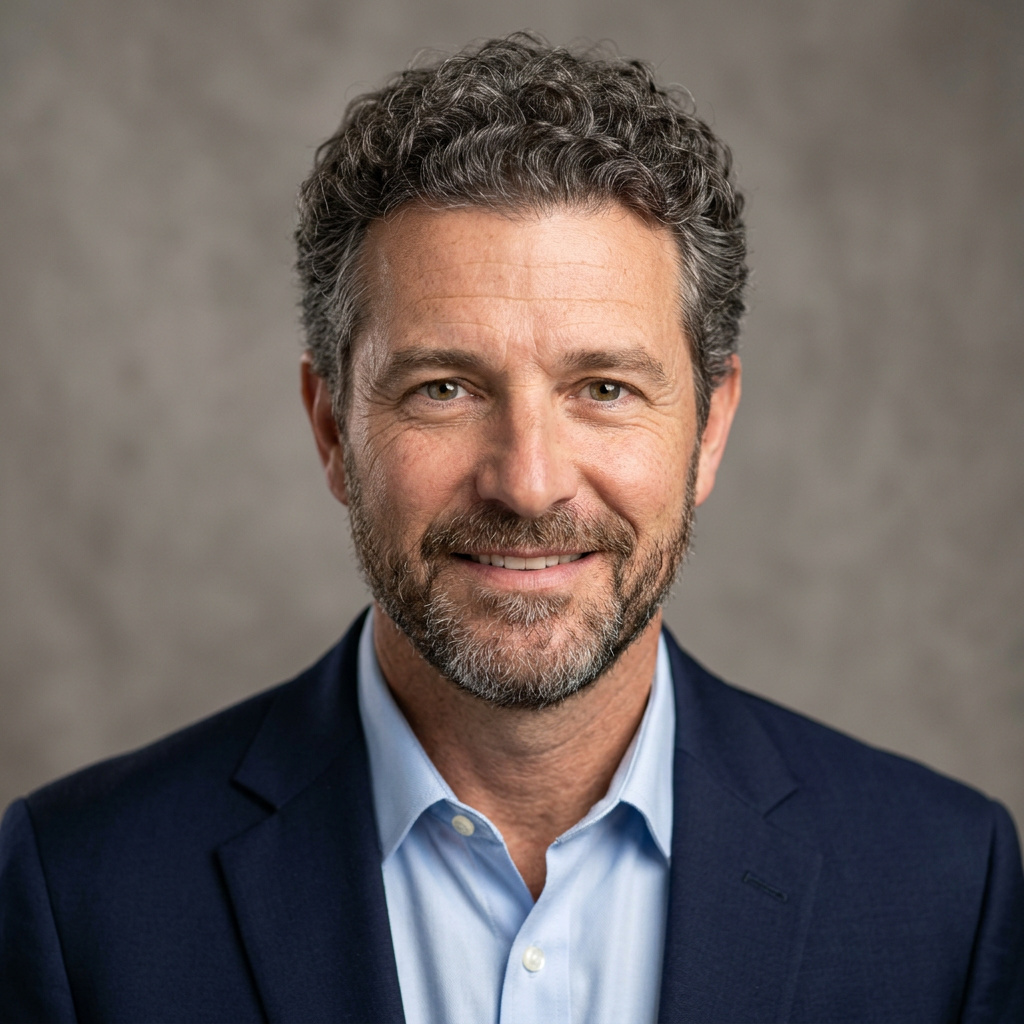
Sam Altman: Net Worth, OpenAI, Elon Musk Feud & Biography
Sam Altman’s name has become nearly inseparable from the AI boom—he’s the CEO of OpenAI, the company behind ChatGPT, with a net worth that Forbes estimated at $1.5 billion in 2024. But the path from a college dropout in Chicago to one of tech’s most influential figures isn’t as straightforward as a single headline, as this profile explores his wealth, his brief firing from OpenAI, and the feud with Elon Musk.
Net worth (estimated): $1.5 billion (Forbes, 2024) · Current role: CEO of OpenAI · Founded: Loopt (2005), OpenAI (2015 with others) · Age: 39 (born April 22, 1985) · Former role: President of Y Combinator (2014-2019) · Notable investment: Led early-stage investments in Airbnb, Stripe, Reddit
Quick snapshot
- Altman is CEO of OpenAI (Biography.com (biography site))
- Net worth ~$1.5B from venture investments (Fortune (business magazine))
- Fired and rehired by OpenAI in Nov 2023 (Biography.com (biography site))
- Owns zero equity in OpenAI (Fello AI (tech analysis site))
- Exact equity stakes in private companies like Helion
- Total value of his Y Combinator investment portfolio
- Specific details of board’s rationale for firing (“lack of candor”)
- Altman’s exact role in the development of ChatGPT specifically
- Altman’s personal investment portfolio diversification outside of reported stakes
- 2005: Drops out of Stanford, founds Loopt (Biography.com)
- 2014: Becomes Y Combinator president (Wikipedia (encyclopedia))
- Nov 2023: Fired, then rehired in 5 days (Fello AI)
- OpenAI valuation surpasses $150B (2024)
- Potential IPO or further restructuring
- Continued legal and public battles with Elon Musk
The snapshot table below shows the key biographical details and wealth metrics that frame Altman’s public profile.
| Label | Value |
|---|---|
| Full name | Samuel Harris Altman |
| Born | April 22, 1985 |
| Education | Stanford University (dropped out) |
| Known for | CEO of OpenAI, Y Combinator |
| Net worth | Est. $1.5 billion (Forbes 2024) |
| Spouse | Oliver Mulherin (married 2024) |
| Residence | San Francisco, California |
How did Sam Altman get so rich?
Early success with Loopt
- Altman dropped out of Stanford in 2005 to co-found Loopt, a social mapping app that let friends share locations in real time (Biography.com (biography site)).
- In 2012, Loopt was sold to Green Dot Corporation for $43.4 million (Wikipedia (encyclopedia)).
- That payout, while modest by later standards, gave him the capital and credibility to move into venture investing.
Y Combinator presidency and investments
- Altman joined Y Combinator in 2011 and became its president in 2014, succeeding Paul Graham (Wikipedia).
- During his tenure, he led early-stage investments that turned into giants: Airbnb, Stripe, Reddit, and Asana (Fortune (business magazine)).
- By June 2024, his investment portfolio—spanning over 400 companies—was valued at around $2.8 billion (Wikipedia).
OpenAI CEO compensation
- Contrary to what many assume, Altman’s OpenAI salary is famously modest: $76,001 per year, plus the minimum required for health insurance (Fortune).
- He owns zero direct equity in OpenAI; his wealth comes almost entirely from those earlier venture bets (Fello AI (tech analysis site)).
- The pattern: Altman made his fortune not by holding a big stake in one company, but by placing small bets across hundreds before they exploded in value. For investors wondering how that strategy compares, the Whitney Wolfe Herd: tech CEO net worth and lawsuits profile offers a similar story of turning a startup exit into a broader portfolio.
Altman, the face of a company now valued at over $150 billion, draws a salary that wouldn’t cover a month’s rent in San Francisco. His real wealth came from being a venture capitalist disguised as a CEO.
Who owns 51% of OpenAI?
OpenAI’s non-profit governance
- OpenAI was launched in 2015 as a non-profit research lab, with a mission to ensure that artificial general intelligence (AGI) benefits all of humanity (Biography.com). The founding board included Altman, Musk, and others.
- In 2019, OpenAI created a “capped-profit” subsidiary—OpenAI LP—to attract outside capital while preserving the non-profit’s governance control (Wikipedia).
The transition to a capped-profit model
- Under the capped-profit structure, investors can earn returns up to 100x their investment, but no further. No single person owns a majority stake.
- Microsoft invested $13 billion over multiple rounds and now holds a reported 49% equity stake in the for-profit subsidiary (Wikipedia).
- The non-profit parent retains the right to dismiss the board and override profit distribution.
Did Sam Altman own 51%?
- The viral claim that Altman owns 51% of OpenAI is false. Multiple sources confirm he holds zero direct equity (Fello AI, Fortune).
- The myth likely stems from confusion about his role as CEO and the board’s unusual governance battle in November 2023.
If you hear “Altman owns 51% of OpenAI,” remember: his power comes from the board seat and the trust of employees, not from equity. The company’s governance is designed to prevent any individual from having controlling financial interest.
The trade-off: OpenAI gets to raise billions without ceding control to a single founder, but that structure also created the board dynamics that led to Altman’s temporary ouster.
Why was Sam Altman kicked out of OpenAI?
The board’s decision (November 2023)
- On November 17, 2023, the OpenAI board—comprising Ilya Sutskever, Adam D’Angelo, Tasha McCauley, and Helen Toner—announced Altman’s removal, citing that he “was not consistently candid in his communications with the board” (Fello AI).
- No more specific explanation was provided publicly, leading to intense speculation.
The employee backlash
- Nearly 95% of OpenAI employees signed a letter threatening to resign unless Altman was reinstated and the board resigned (Biography.com).
- The board appointed Emmett Shear (former CEO of Twitch) as interim CEO, but the revolt made the position untenable.
His reinstatement after five days
- After intense negotiations, Altman was reinstated on November 22, 2023—exactly five days after his firing (Fello AI).
- The board was replaced, with Bret Taylor (chair), Larry Summers, and Adam D’Angelo (the only holdover) taking over (Wikipedia).
The pattern: Altman’s firing revealed a company where the CEO had enormous employee loyalty but a fractured board. The speed of the reversal suggests the board underestimated the backlash—and Altman’s leverage.
Does Sam Altman donate to Donald Trump?
Altman’s known political donations
- Altman has primarily donated to Democratic candidates and causes. In 2020, he publicly opposed Trump’s reelection (Wikipedia).
- His campaign contributions on file with the FEC show no donations to Donald Trump or Trump-affiliated PACs.
Party affiliation
- Altman has described himself as a “small-d democrat” and has given to both moderate and progressive Democrats.
- He has also donated to nonpartisan causes around AI safety and pandemic preparedness.
The catch: While Altman isn’t a Trump donor, he has engaged with the current administration on AI regulation—pragmatism that sometimes blurs partisan lines.
Why does Elon not like Sam Altman?
Disagreement over OpenAI’s direction
- Elon Musk co-founded OpenAI in 2015 alongside Altman, but left in 2018, citing a potential conflict of interest with Tesla’s AI work (Biography.com).
- Musk has since argued that OpenAI abandoned its original non-profit mission and became a “closed-source, profit-driven company” after partnering with Microsoft (Wikipedia).
Public criticism from Elon Musk
- Musk has repeatedly tweeted criticism, calling OpenAI “a wholly owned subsidiary of Microsoft” and attacking Altman personally.
- In 2024, Musk filed a lawsuit against OpenAI and Altman, alleging breach of contract and fiduciary duty—though the suit was later withdrawn (Fortune).
The falling out
- The feud reflects a deeper philosophical divide: Musk wants open-source AI development; Altman believes a capped-profit model can still serve humanity while attracting capital.
- For entrepreneurs navigating high-stakes founder conflicts, the Emma Grede: entrepreneur biography and building wealth story shows a different path—one where partnerships remain intact through clear governance.
Musk and Altman both claim to want safe AI. But Musk wants it open and nonprofit; Altman wants it commercially viable. Their feud is a proxy for the industry’s biggest unsolved question: can you profit from AI and still keep it safe?
What this means: The Altman-Musk rift is unlikely to heal as long as OpenAI remains a for-profit entity. The lawsuit and public attacks are symptoms of a broader ideological battle over AI governance.
Timeline: Sam Altman’s career
- 2005 – Drops out of Stanford to found Loopt (Biography.com)
- 2012 – Sells Loopt to Green Dot for $43.4 million (Wikipedia)
- 2014 – Becomes president of Y Combinator (Wikipedia)
- 2015 – Co-founds OpenAI with Elon Musk, Greg Brockman, Ilya Sutskever, and others (Biography.com)
- 2018 – Musk leaves OpenAI board
- 2019 – Steps down from Y Combinator to focus on OpenAI as CEO (Biography.com)
- November 17, 2023 – Fired by OpenAI board for lack of “consistent candor” (Fello AI)
- November 22, 2023 – Reinstated as CEO after employee revolt (Fello AI)
- 2024 – Marries Oliver Mulherin; OpenAI valuation surpasses $150B
What’s confirmed vs. still unclear
Confirmed facts
- Altman’s net worth is estimated at $1.5B+ from venture investments (Biography.com)
- OpenAI has a capped-profit structure; no single person owns 51% (Wikipedia)
- Altman was fired and rehired by OpenAI in November 2023 (Fello AI)
- Altman is married to Oliver Mulherin (2024)
- Altman does not donate to Donald Trump (Wikipedia)
What’s unclear
- Exact equity stakes in private companies like Helion
- Total value of his Y Combinator investment portfolio
- Specific details of the board’s rationale for firing (“lack of candor”)
- Altman’s exact role in the development of ChatGPT specifically
- Altman’s personal investment portfolio diversification outside of reported stakes
Key quotes
I love the OpenAI team so much. More to come shortly.
Sam Altman, in a tweet after his reinstatement, November 2023 (Fello AI)
OpenAI was created as an open source (which is why I named it “Open” AI), non-profit company to serve as a counterweight to Google, but it has now become a closed-source, profit-driven company controlled by Microsoft.
Elon Musk, in a public statement, 2023 (Wikipedia)
Sam Altman was not consistently candid in his communications with the board.
OpenAI board statement, November 17, 2023 (Fello AI)
Sam Altman’s story is not about a single company or a sudden windfall. It’s about a career built on strategic bets—on Loopt, on Y Combinator, on a portfolio of startups, and finally on OpenAI without any equity. For the next generation of tech entrepreneurs, the implication is clear: build leverage through reputation and network, not just ownership—or risk having your board decide your fate in five days.
For those seeking a deeper dive, Australia Data offers a detailed net worth and biography covering his early startups and current holdings.
Frequently asked questions
What is Sam Altman’s educational background?
He studied computer science at Stanford University but dropped out in 2005 to found Loopt (Biography.com).
How many companies has Sam Altman founded?
He co-founded Loopt (2005) and OpenAI (2015). He was also a primary force behind Y Combinator’s growth but didn’t found it (Wikipedia).
Is Sam Altman a billionaire?
Yes. Forbes estimated his net worth at $1.5 billion in 2024, primarily from venture investments (Biography.com).
What is Sam Altman’s role at Y Combinator?
He served as president from 2014 to 2019, leading investments in startups like Airbnb and Stripe (Wikipedia).
Did Sam Altman own 51% of OpenAI?
No. He owns zero direct equity in OpenAI. Microsoft holds about 49% of the for-profit subsidiary (Fello AI).
Who owns the majority of OpenAI?
Microsoft is the largest outside investor with 49% of the capped-profit subsidiary. The non-profit parent retains governance control (Wikipedia).
More related posts
 William Jackson Harper: The Good Place Actor Bio & Career
 Sam & Cat Canceled: Why the Nickelodeon Spin-off Ended
 Bethany Joy Lenz: Cult, Divorce, Feuds, and New Book Explained
 Steve Irwin Death: How Did a Stingray Kill Him
 Imogen Faith Reid: Age, Height, Dwarfism, Hulu Role
 Tori Spelling: Life, Divorce, Net Worth, and Health Updates
 Alice in Wonderland: Real Story, Author, Characters & Meaning
 Michael Ennis: NRL Career, Fox League Role & Net Worth