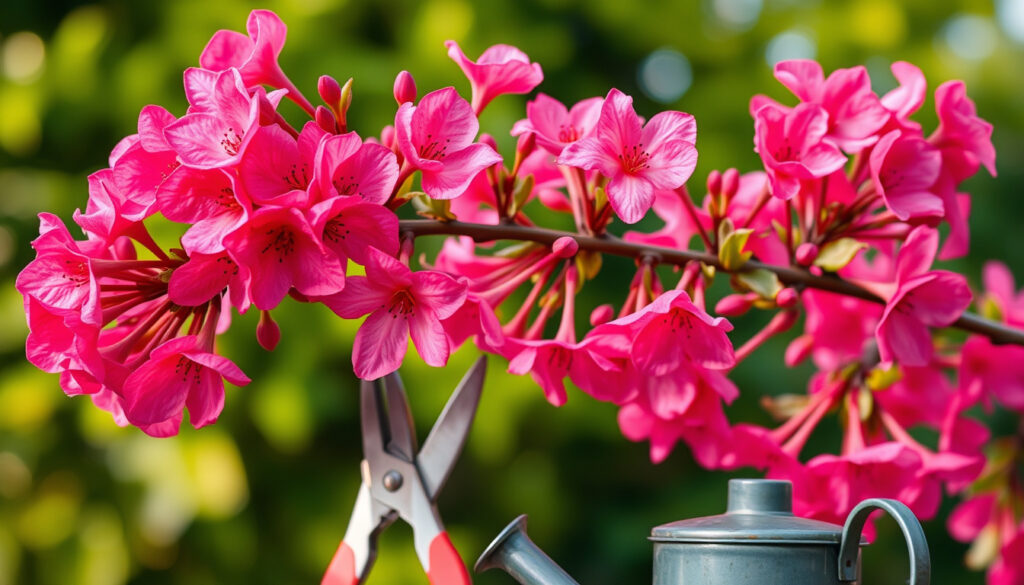
Crepe Myrtle Tree: Pros, Cons & Care
Few garden plants stir up as much love and frustration as the crepe myrtle tree. Its summer fireworks of pink, purple, and red blooms are iconic across the Southern United States, yet the same tree that delivers that show also drops leaves, flowers, and bark all over your lawn.
Maximum height: 2–8 m (6–26 ft) · Bloom season: Summer (June–September) · Sun requirement: Full sun (6+ hours daily) · Native range: Indian subcontinent, Southeast Asia · Common flower colors: Pink, purple, red, white · Hardiness zones: USDA 7–9
Quick snapshot
- Deciduous tree or shrub, grows 2–8 m tall (University of Tennessee Extension)
- Requires full sun and well-drained soil (LSU AgCenter)
- Blooms in summer (June–September) in pink, purple, red, and white (University of Tennessee Extension)
- Exact number of species in the Lagerstroemia genus is debated
- Precise origins of the name crape myrtle are not documented
- Long-term effects of climate change on hardiness zones remain uncertain
- Best planting window: fall or early spring, fall preferred (University of Tennessee Extension)
- First-season watering: 10 gallons per week for a 5-gallon pot (University of Tennessee Extension)
- Expect flowers 4–12 weeks in summer depending on variety (LSU AgCenter)
- Plan for annual shaping in late winter before growth starts (LSU AgCenter)
- Monitor for powdery mildew in humid spells (LSU AgCenter)
Ten key facts at a glance, one pattern: the crepe myrtle’s needs are straightforward, but its size and messiness demand real planning.
| Attribute | Value |
|---|---|
| Botanical Name | Lagerstroemia indica |
| Common Name | Crepe Myrtle, Crape Myrtle |
| Height | 2–8 m (6–26 ft) |
| Spread | 1.5–4 m (5–13 ft) |
| Sun Requirement | Full sun |
| Soil pH | 5.5–7.5 |
| Bloom Time | Summer (June–September) |
| Flower Color | Pink, purple, red, white |
| Hardiness Zones | USDA 7–9 |
| Native Area | Indian subcontinent, Southeast Asia |
Homeowners in zones 7–9 get a drought-tolerant tree with spectacular summer color — but they also get a plant that drops leaves, flowers, and bark across patios and driveways. The beauty comes with a cleanup cost.
What are the disadvantages of crepe myrtles?
Messy leaf and flower drop
- Crepe myrtles shed spent flowers, old leaves, and peeling bark continuously through summer and autumn, creating a layer of debris underneath the canopy.
- The LSU AgCenter (Louisiana’s agricultural extension service) notes that the tree’s natural habit drops bark strips in winter, adding to the mess.
Susceptibility to powdery mildew
- In humid climates, crepe myrtles are prone to powdery mildew, a white fungal coating that distorts leaves and reduces bloom quality.
- The University of Tennessee Extension (UT Extension) recommends good air circulation and resistant varieties like ‘Natchez’ to manage the problem.
Short bloom period and bark peeling
- Individual flowers last only a few days, though the tree blooms for 4–12 weeks depending on variety and climate.
- Bark peeling, while attractive to some gardeners, creates additional litter that can clog gutters and collect around the base.
Pruning and maintenance requirements
- Improper pruning — often called “crepe murder” — severely damages the tree’s natural shape and flowering ability.
- Proper pruning requires annual attention in late winter, cutting back to limbs of the desired diameter rather than topping. The LSU AgCenter (Louisiana’s agricultural extension service) advises never cutting trunks back to stubs.
The mess factor is the single biggest reason homeowners remove crepe myrtles. If you plant one near a patio, driveway, or pool, you are signing up for regular sweeping and leaf blowing.
The pattern: the disadvantages are real, but they can be mitigated with proper variety selection and placement.
Why don’t people like crepe myrtles?
Sap and sticky residue
- Aphids feeding on crepe myrtle leaves excrete a sticky substance called honeydew that coats cars, patio furniture, and walkways.
- The honeydew often grows a black sooty mold, further staining surfaces underneath the tree.
Winter dieback in colder zones
- In USDA zones below 7, crepe myrtles may suffer winter dieback, with branches dying back to the ground.
- The University of Tennessee Extension (UT Extension) warns that zone 6 gardeners should choose hardy varieties and plant in protected locations.
Pest issues (aphids, sooty mold)
- Aphid infestations are common, especially on new growth, leading to curled leaves and reduced vigor.
- Sooty mold, while not harming the tree directly, blocks sunlight from leaves and is unsightly.
Limited shade and root competition
- Crepe myrtles have a relatively open canopy that provides light, dappled shade rather than dense cover.
- Roots can compete with nearby plants for water and nutrients, especially in the first few years.
The pattern: many anti-crepe myrtle complaints stem from planting in the wrong spot — too close to surfaces, in shade, or in a climate that’s too cold. Choose the location wisely, and most of these issues shrink dramatically.
Where is the best place to plant a crepe myrtle?
Full sun and well-drained soil
- Crepe myrtles require at least 6 hours of direct sun daily for best bloom and mildew resistance (LSU AgCenter).
- The ideal soil pH is 5.5 to 6.5, but the trees tolerate clay, loam, or sandy soils as long as drainage is good (University of Tennessee Extension).
Distance from structures and pathways
- Monrovia (Monrovia, a leading nursery brand) recommends 10–15 feet of space from foundations, driveways, and decks.
- Plant at least 5 feet from walkways to avoid branches brushing pedestrians and dropping debris on paths.
Avoiding low-lying frost pockets
- Cold air settles in low spots, increasing the risk of frost damage to flower buds and tender growth.
- Plant on a slight slope or elevated area in zones 7 and below to improve hardiness.
Considering mature size for spacing
- Standard varieties reach 20–30 feet tall with a 15–20 foot spread — plan for room to grow.
- Dwarf varieties like ‘Pocomoke’ (2–4 ft) work for smaller gardens or container planting.
Planting a crepe myrtle too close to a house or driveway might feel fine for the first 3 years. By year 8, the canopy will shed debris directly onto your roof and the roots may heave pavement.
The implication: choosing the right spot is the most important decision you’ll make.
How big do crepe myrtle trees get?
Six size categories, one trade-off: taller varieties bloom more but drop more debris and require more space.
| Variety Type | Mature Height | Mature Spread | Growth Rate |
|---|---|---|---|
| Dwarf (e.g., ‘Pocomoke’) | 2–4 ft (0.6–1.2 m) | 3–5 ft (0.9–1.5 m) | Slow–moderate |
| Semi-dwarf (e.g., ‘Tuscarora’) | 10–15 ft (3–4.5 m) | 8–12 ft (2.4–3.6 m) | Moderate |
| Medium (e.g., ‘Tonto’) | 12–18 ft (3.6–5.5 m) | 10–15 ft (3–4.5 m) | Moderate |
| Standard (e.g., ‘Natchez’) | 20–30 ft (6–9 m) | 15–20 ft (4.5–6 m) | Moderate–fast |
| Large standard (e.g., ‘Muskogee’) | 20–30 ft (6–9 m) | 18–25 ft (5.5–7.6 m) | Moderate–fast |
Growth rate across varieties runs 1–2 feet per year, according to the University of Tennessee Extension (UT Extension). Dwarf types reach full size in 3–5 years; standards take 8–12 years.
The implication: choose a variety whose mature height matches your site. A large standard planted under a power line or near a house will inevitably need harmful topping.
What are the best companion plants for crepe myrtle?
Low-growing perennials (lavender, salvia)
- Drought-tolerant perennials like lavender and salvia thrive in the same full-sun, well-drained conditions as crepe myrtles.
- They grow low enough not to compete for light and add contrasting texture and color below the tree’s canopy.
Ornamental grasses (maiden grass, fescue)
- Grasses such as maiden grass (Miscanthus) and blue fescue (Festuca glauca) create a soft, textural bed under the tree’s open canopy.
- Their fine foliage contrasts nicely with the crepe myrtle’s broad leaves and peeling bark.
Groundcovers (liriope, creeping phlox)
- Liriope (monkey grass) and creeping phlox spread as low mats that help suppress weeds and unify the planting area.
- Both tolerate moderate shade and root competition once established.
Avoiding plants that compete for sun or water
- Do not plant shallow-rooted annuals that need frequent watering directly under a crepe myrtle — the tree’s roots will take most of the moisture.
- Avoid plants that require shade or prefer acidic soil, since crepe myrtles like neutral to slightly acidic pH.
What this means: the best underplantings treat the crepe myrtle’s debris drop as mulch, not as a problem. Grasses and tough perennials that tolerate leaf litter are the smartest match.
Pros & Cons of the Crepe Myrtle Tree
Upsides
- Showy summer blooms in pink, purple, red, and white lasting 4–12 weeks
- Attractive peeling bark and good fall color on many varieties
- Drought tolerant once established (University of Tennessee Extension)
- Tolerates a range of soil types from clay to sand
- Available in dwarf to standard sizes to fit most garden spaces
Downsides
- Messy leaf, flower, and bark drop throughout the growing season
- Susceptible to powdery mildew in humid conditions (LSU AgCenter)
- Aphids produce sticky honeydew that attracts sooty mold
- Needs annual pruning in late winter to maintain shape and bloom
- Improper pruning (“crepe murder”) permanently damages structure
- Winter dieback in USDA zones below 7
“Crape myrtles are the South’s most popular flowering tree because they deliver reliable color in the heat of summer when few other plants bloom. But they aren’t maintenance-free — the debris issue is real.”
— Southern Living (established editorial gardening authority)
“In cooler climates like the UK, you can grow crepe myrtle in a sheltered, sunny spot against a warm wall. It won’t reach Southern sizes, but the flowers are still spectacular.”
— GardenersWorld (trusted UK gardening publication)
For more on science and health, see our article on Sea Salty: Science, Health Benefits, and Risks Explained.
How to plant a crepe myrtle tree — step by step
- Choose the right time of year
- Plant in fall or early spring. Fall is preferred because cooler temperatures let roots establish before summer heat (University of Tennessee Extension).
- Avoid planting during hot, dry summer months when water stress is highest.
- Dig the correct hole
- Dig a hole twice as wide and the same depth as the root ball (University of Georgia CAES Field Report).
- Do not amend the backfill with organic matter like peat moss or pine bark — crepe myrtles adapt best to native soil (LSU AgCenter).
- Set the tree at the right depth
- Place the root ball so the top is level with the surrounding soil — no deeper than it grew in the container (University of Georgia CAES Field Report).
- Planting too deep encourages root rot and suffocates the tree.
- Water and mulch thoroughly
- Water deeply immediately after planting. A 5-gallon tree needs about 10 gallons per week during its first season if rain is scarce (University of Tennessee Extension).
- Apply 2–3 inches of organic mulch around the tree, keeping it a few inches away from the trunk to prevent rot (Monrovia).
- Stake only if necessary
- Staking is rarely needed for container-grown trees with healthy root systems.
- If you do stake, remove supports after one growing season to prevent trunk girdling.
The trade-off: proper planting takes 20 minutes on day one but saves you years of headaches. Getting the depth wrong or skipping the mulch layer are the two most common mistakes extension offices see with beginner plantings.
images.thdstatic.com, primexgardencenter.com, bloomingexpert.com, homesandgardens.com, thetreecenter.com
For gardeners in cooler regions, the detailed guide on growing crepe myrtles in cool climates offers essential overwintering tips.
Frequently Asked Questions
How often should I water a crepe myrtle?
Water deeply once a week during the first growing season — about 10 gallons per week for a 5-gallon pot size (University of Tennessee Extension). Once established, crepe myrtles are drought tolerant and need water only during extended dry spells.
When is the best time to prune a crepe myrtle?
Late winter, just before new growth begins in spring, is the ideal time. Remove crossing branches, suckers, and limbs that rub. Never cut main trunks back to stubs — that practice, called “crepe murder,” ruins the tree’s natural form (LSU AgCenter).
Can crepe myrtle grow in partial shade?
It can survive in partial shade, but bloom production drops significantly and powdery mildew becomes more common. For best results, plant in full sun — at least 6 hours of direct light daily (LSU AgCenter).
Is crepe myrtle deer resistant?
Yes, crepe myrtle is generally considered deer resistant. Deer rarely browse the leaves or bark, making it a good choice for gardens in areas with heavy deer pressure.
How long does a crepe myrtle bloom?
The bloom period lasts 4–12 weeks, typically from June through September depending on the variety and local climate. Each individual flower lasts only a few days, but new flowers open continuously on the same panicle.
What causes crepe myrtle leaves to turn yellow?
Yellow leaves can result from overwatering, underwatering, nutrient deficiency (especially iron), or powdery mildew. Check soil moisture first — the tree needs well-drained conditions. If the soil is consistently damp, root stress is likely the culprit.
How to fertilize a crepe myrtle tree?
Fertilize lightly in early spring with a balanced slow-release fertilizer (e.g., 10-10-10). Avoid high-nitrogen formulas, which promote leafy growth at the expense of flowers. The University of Tennessee Extension (UT Extension) recommends a soil test first to check for phosphorus and potassium levels.
The pattern: these answers cover the most common concerns for crepe myrtle owners.
For more on travel and nature, see our Ayers Rock (Uluru) Visitor Guide.
For gardeners in Ireland or similar cool, damp climates, crepe myrtle can be grown in a sheltered, sunny spot against a warm wall — but expect smaller size and shorter bloom than Southern gardens deliver. For the majority of US homeowners in USDA zones 7–9, the choice is clear: pick a variety that matches your space, plant it where debris won’t drive you crazy, and you’ll have a reliable summer show for decades.
More related posts
 China Eastern Airlines Review: Safety, Service & Value Compared
 William Jackson Harper: The Good Place Actor Bio & Career
 Melbourne to Hobart Flights – Direct Options, Prices from $41
 Keanu Reeves Wife – Is He Married to Alexandra Grant?
 Guy Ritchie: Biography, Net Worth & Life with Madonna
 Get Out: Plot Twist, Meaning, and Scary Scenes Explained
 Nathan Merritt: Cancer Battle and Family Update
 Stella McCartney: Biography, Net Worth & Latest News