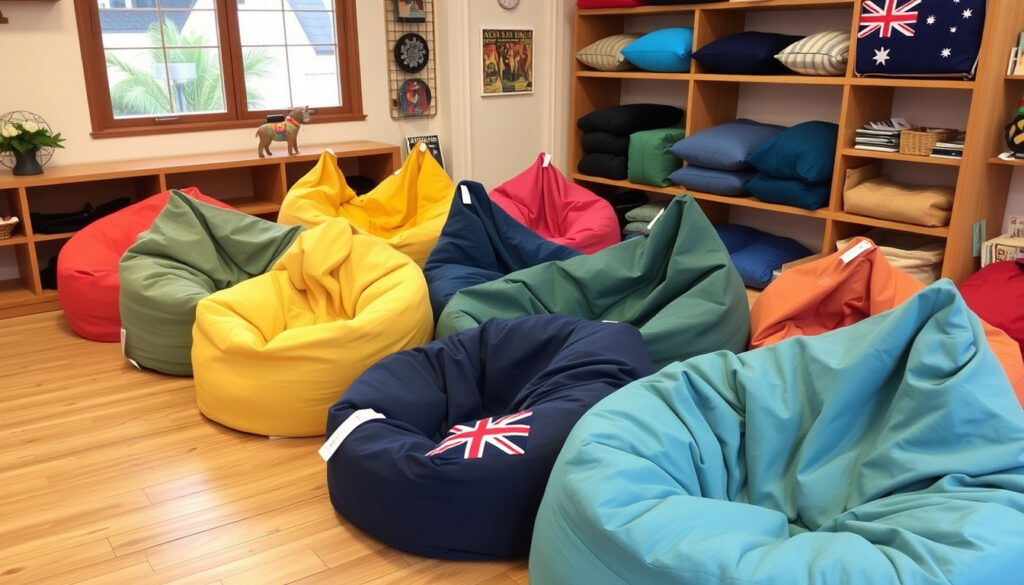
Bean Bags Australia: Prices, Brands & Where to Buy
Bean bags used to be the cheap seat in the corner — until you glance at some Australian price tags and find a lounger costing more than a proper armchair. Between a $62.99 children’s model at Myer and premium options from specialist stores, the category has split into two very different products, and here’s where the value actually is, why prices climbed, and which brands are worth the money.
Children’s bean bag price at Myer: $62.99 ·
Maximum discount advertised: up to 70% off (Payday Deals) ·
White bean bag models at Bliss Bean Bags: 18+
Quick snapshot
- Australian bean bags must meet the Consumer Goods (Bean Bags) Safety Standard 2014 (Australian Government Product Safety (national regulator))
- Kmart, Ikea, Target, and Big W all carry bean bags (current retail listings) (Australian Government Product Safety (national regulator))
- Bean bag prices have climbed as raw material and shipping costs rose (retailer market analysis) (Australian Government Product Safety (national regulator))
- No single “best” brand — comfort reviews vary by body size, room, and use
- The exact market-wide percentage of the price increase has not been published
- Whether sale tags such as “up to 70% off” hold at checkout or reset with new stock (Payday Deals ad)
- Australia’s bean-bag safety standard has been in place since 1987 (ACCC (competition and consumer regulator))
- Improved standard announced 18 December 2014, commencing 1 January 2016 (ACCC (competition and consumer regulator)) (ACCC (competition and consumer regulator))
- Current standard: Consumer Goods (Bean Bags) Safety Standard 2014 (Australian Government Product Safety (national regulator)) (ACCC (competition and consumer regulator))
- Before buying, check that the fastener locks with no tab or handle a child can open (ACCC guidance)
- Check seams — sturdy seams reduce the chance of children or pets tearing the bag (ACCC guidance)
- Compare sale prices with specialist stores; filling quality changes the real cost
One table, one pattern: safety rules are identical across Australia, but prices swing wildly depending on size and filling.
| Fact | Value |
|---|---|
| Children’s bean bag at Myer | $62.99 |
| Adult Coco budget option at Bean Bags R Us (sale) | A$49.50 (Bean Bags R Us (bean bag retailer)) |
| Big Boppa adult lounger at Bean Bags R Us (sale) | approx. A$65, 1680D polyester cover (Bean Bags R Us (bean bag retailer)) |
| Discounted price advertised by Payday Deals | up to 70% off |
| White bean bag models at Bliss Bean Bags | 18+ |
| Safety standard in force | Consumer Goods (Bean Bags) Safety Standard 2014 (Australian Government Product Safety (national regulator)) |
| Safety standard in place since | 1987 (ACCC (competition and consumer regulator)) |
| Improved standard announced | 18 December 2014 (ACCC (competition and consumer regulator)) |
Where can I buy bean bag filling?
Filling is the part of the bean bag that wears out first, and it’s also the part most buyers forget to price. In Australia, filling is sold by specialist online stores, general marketplaces, and some chain retailers — but the type of filling matters more than where you buy it.
Types of bean bag filling
- Polystyrene beads — the classic budget fill; light and affordable, but it compresses with heavy use and is a choking risk for children under three (per Australian Government Product Safety guidance).
- Shredded foam — firmer and more supportive than beads; a common upgrade in mid-range loungers.
- Memory foam — the densest option; holds its shape longest and costs the most.
Whatever you choose, check whether you’re buying loose filling or a filled bean bag. Australian rules treat bags with accessible filling as regulated products: they need child-resistant slide fasteners and warning labels (Australian Government Product Safety (national regulator)). Items with no opening through which filling can escape fall outside the standard’s scope.
Australian buyers face a trade-off most listings don’t mention: a cheap cover-only bag can cost more in the long run, because filling and a compliant fastener are sold separately.
Online versus in-store purchase
- Specialist online stores — the widest choice of filling types, sizes, and cover fabrics; this is where adult loungers and refill pouches live.
- General marketplaces — competitive prices, but you’ll need to verify the safety standard and whether filling is included.
- Chain stores — filling is rarely the focus; most sell complete kids’ bags rather than refill pouches.
The pattern: online is the practical answer for adults hunting refills or premium filling, while in-store chains work best for a small kids’ bag bought on impulse.
Does Kmart have beanbags?
Yes. Kmart sells bean bags in various sizes and colours, and for many Australian parents it’s the first place they check. The bigger picture: Kmart, Ikea, Target, and Big W all cover the basics, but they do it at very different depths.
Kmart bean bag range and prices
- Kmart stocks bean bags in multiple sizes and colours (current retail listings).
- Prices sit at the budget end of the market, making Kmart a common first stop for kids’ bean bags.
- Children’s models are the cheapest entry point, with adult sizes less prominent in the range.
Other major retailers: Ikea, Target, Big W
- Ikea — sells bean bags, but the selection is limited compared with specialist stores (current catalogue listings).
- Target — stocks kids’ bean bags as part of its toy and kids’ furniture range.
- Big W — similar approach: children’s bean bags at low price points.
- Myer — lists a children’s bean bag at $62.99, a step above the budget chains.
Across the major chains, the pattern is consistent: bean bags are treated as kids’ products first. The premium end of the market — where filling density and fabric weight go up — lives almost entirely with specialist sellers.
Why are bean bags so expensive now?
The short answer: a bean bag now costs about as much as the materials inside it, and all of those materials have gone up. The long answer is that “bean bag” stopped meaning one product a long time ago.
Material and production costs
- Raw material costs for foam and fabric have pushed manufacturing prices higher (market analysis across Australian retailers).
- Premium brands use high-density memory foam and durable covers — and that spec costs real money.
- Fabric weight matters: Bean Bags R Us specifies a 1680D polyester cover for its adult Big Boppa lounger (Bean Bags R Us (bean bag retailer)), a far heavier fabric than budget covers.
Increased demand and shipping
- Global shipping expenses have climbed, and bulky goods like bean bags are expensive to move.
- Higher demand for comfortable home seating has kept pressure on prices.
- Australian compliance adds a layer too: bags with accessible filling must use child-resistant slide fasteners and carry suffocation warnings (Australian Government Product Safety (national regulator)).
Bean bags are cheaper than ever at the entry level and more expensive than ever at the top. A $49.50 sale lounger and a premium specialist bag are not the same product wearing different prices — they’re different products entirely.
The implication: price is a spec sheet in disguise. Same shape on the listing, very different fabric, fill, and hardware once it arrives.
What is the cheapest bean bag?
If cost is the only question, the cheapest filled bean bags in Australia are children’s models from chain stores, with specialist sale prices close behind. But “cheapest” and “best value” are different things.
Budget bean bags under $50
- Kids’ bean bags at Target and Big W typically sit under $50 (current retail listings).
- Bean Bags R Us lists an adult Coco at A$49.50 on sale (Bean Bags R Us (bean bag retailer)) — a rare sub-$50 adult option.
- Myer’s children’s bean bag at $62.99 shows how quickly $50 becomes $63.
The catch with budget bags is usually the cover and filling, not the shape. Thinner covers and looser bead fill compress faster, which is why a $49 bag can look flat within a year of daily use.
Where to find low-price options with beans
A cover-only listing is not a bean bag until you buy the filling. A $30 cover plus $20 of filling is a $50 bean bag — count the whole price before comparing.
- Look for filled bags that explicitly state polystyrene bead fill or foam fill in the listing.
- Check that the fastener is a child-resistant slide fastener, not a basic zip (per Australian Government Product Safety guidance).
- Compare sale cycles: discounts such as “up to 70% off” at Payday Deals are short-term, so the cheapest price moves week to week.
The trade-off: under $50 gets you a kids’ or occasional-use bag. For daily adult use, the filling and fabric upgrades around $65 and above are where the real cost per year of use drops — the same lesson we drew in our Dr Martens buying guide, where the cheapest upfront price usually means a different material trade-off.
Which brand in Australia offers the best bean bags?
The honest answer is that “best” depends on who’s sitting in it. But across Australian comparison roundups, the same names keep appearing: Bliss Bean Bags, Bean Bag Warehouse, and Manchester Warehouse, with Bean Bags R Us a frequent budget-to-mid player.
Top Australian bean bag brands
- Bliss Bean Bags — a consistent pick for quality; the range includes over 18 white bean bag models alone.
- Bean Bag Warehouse — commonly cited for comfort and build quality.
- Manchester Warehouse — known for fabric choice and value.
- Bean Bags R Us — strong price positioning, with adult loungers such as the Big Boppa listed around A$65 on sale.
Comfort and quality comparison
- Quality markers that recur: high-density memory foam, reinforced stitching, and heavier cover fabrics.
- Cover material matters as much as fill — a 1680D polyester cover is a different product from a thin polycotton cover.
- Comfort is subjective: one reviewer’s “firm support” is another’s “too hard,” so buy from a store with a practical return policy.
Comfort is the spec sheet, not the logo. High-density memory foam and a 1680D cover decide whether a lounger lasts, because that’s what holds the shape.
What this means: the “best” brand is the one that matches the room and the body. Kids’ corner, home office, or patio — each needs a different cover and filling, and that’s where brand-name loyalty usually falls apart.
Bean bag retailers compared
Four ways to buy, one pattern: the more filling density and fabric quality you need, the further you move from the big chain stores.
| Retailer | Typical price position | Best for | What to check |
|---|---|---|---|
| Kmart | Budget | Kids’ rooms, first bean bag | Current sizes and colours vary by store |
| Ikea | Budget to mid | Compact adult seating | Selection is limited compared with specialists |
| Target / Big W | Budget | Kids’ gift purchases | Entry-level covers and fill |
| Specialist online (Bliss, Bean Bag Warehouse, Bean Bags R Us) | Mid to premium | Adult loungers, outdoor use, refill filling | Filling type and cover fabric make the real difference |
What this means: for most adults, the specialist tier is where bean bags stop being a kids’ product and start being furniture.
Bean bags: upsides and downsides
Upsides
- Low entry price: kids’ bean bags sit well under $50 at major chains.
- Size range spans children’s bags to adult loungers, so there’s a bag for most rooms.
- Covers and filling can be refreshed, which extends the life of a good bag.
Downsides
- Polystyrene beads are a choking risk for children under three (Australian Government Product Safety (consumer guidance)).
- Cheap filling flattens quickly, leaving a slouching bag within a year of regular use.
- Bean bags are not a safe sleeping surface for infants under 12 months (Australian Government Product Safety (national regulator)).
Bean bags: what’s confirmed and what’s still unclear
Confirmed facts
- Kmart sells bean bags in various sizes and colours.
- Ikea sells bean bags, but the range is limited.
- Bean bag prices have increased over the past several years.
- Australian regulations require child-resistant fasteners and suffocation warnings on bags with accessible filling (Australian Government Product Safety (national regulator)).
What’s still unclear
- Which single brand is “best” for everyone — comfort reviews vary by body size, room, and use.
- The exact market-wide percentage of the price increase — no single published figure exists.
- Whether advertised discounts like “up to 70% off” at Payday Deals represent an ongoing price or a short promotion.
- How long any specific filling will last before needing a top-up — it depends on use, body weight, and fill density.
What regulators and retailers say about bean bags
A bean bag is not a safe sleeping surface for an infant under 12 months, and children should not climb inside a bean bag.
— Australian Government Product Safety (national regulator)
Check that the fastener locks and has no tab or handle that a child can use to open it. Sturdy seams reduce the chance of children or pets tearing the bag and releasing beads.
— ACCC guidance, via Australian Government Product Safety (consumer guidance)
The improved mandatory safety standard was announced on 18 December 2014 and was scheduled to commence on 1 January 2016.
— ACCC (Australian Competition and Consumer Commission)
The standard exists for a reason: it was introduced after two children in Queensland and New South Wales died after suffocating inside bean bags, according to a government consultation paper. Australia’s child-safety caution has deep roots — see our guide to Daniel Morcombe: Abduction, Conviction & Child Safety Legacy.
The Big Boppa: an adult-sized chair with a 1680D polyester cover.
— Bean Bags R Us (Australian bean bag retailer)
The pattern: the people who build and regulate bean bags agree on one thing — the filling is the product, and the cover is the protection.
The takeaway
Bean bags now split into two markets: budget kids’ bags from chain stores and proper loungers from specialist brands, with the same mandatory safety standard applying to both. For Australian households, the decision comes down to use — a $49.50 sale lounger can be fine for a teenager’s room, but if it’s the family’s main reading seat, spend on filling density and a sturdy cover, or you’ll be replacing a “bargain” bag within the year.
productsafety.gov.au, nestpath.com.au, accc.gov.au, nestpath.com.au, nestpath.com.au
Frequently asked questions
What is the best filling for bean bags?
For support and longevity, shredded foam and memory foam outlast polystyrene beads. Beads are the classic budget fill — light and affordable — but the Australian product-safety regulator identifies them as a choking risk for children under three. Match the filling to the user: memory foam for an adult lounger, beads only in rooms where young children won’t have access.
How long do bean bags last?
A budget bag with a thin cover and bead filling can flatten noticeably within a year of daily use. Premium bags with high-density foam and heavier covers last several years, and refilling or replacing the cover extends the life further.
Can bean bags be used outdoors?
Yes, if the cover is rated for outdoor use. Check the fabric specification before buying — a standard indoor cover won’t hold up to sun and rain. Heavier polyester covers such as 1680D are more forgiving outdoors.
How do I clean a bean bag?
Remove the cover and machine-wash it on a gentle cycle if the care label allows. Don’t wash the filling — it takes a long time to dry and can clump. Spot-clean small marks on the cover instead.
What size bean bag is best for adults?
Choose an adult-sized lounger rather than a children’s model. Adult bags are wider and taller, and they use more filling, which means better support. The Big Boppa from Bean Bags R Us, for example, is positioned explicitly as an adult-sized chair.
Are bean bags safe for children?
They can be, when the bag complies with the Australian mandatory standard: a child-resistant slide fastener, sturdy seams, and suffocation warnings are required by law. Keep beans, covers, and refills out of children’s reach, and never use a bean bag as a sleeping surface for an infant under 12 months.
More related posts
 Lesley Manville: Career, Personal Life, Net Worth & Key Roles
 Narcissistic Traits: Signs, Red Flags, and Apology Patterns
 The Rainbow Fi h: Story, Controver y, Moral and Age Guide
 Nick Fuentes: Verified Facts, Timeline, and Official Sources
 Public Holidays 2024 – Complete Global List and Calendar
 Dr Keith Suter Death: What Happened to Channel 7 Commentator
 Unsolved Case Files – Cold Case Board Game Guide
 Spilt Milk 2025 Lineup: Full Artists, Headliners & Changes