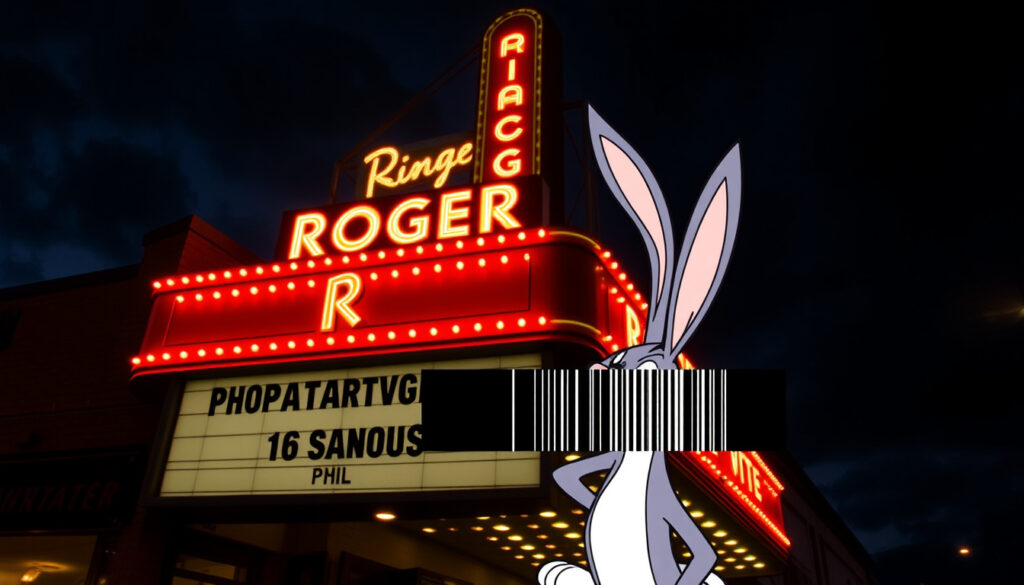
Roger Rabbit: Film Guide, Age Appropriateness & Controversy
The 1988 hybrid film Who Framed Roger Rabbit remains a technical marvel that still divides parents today. This fact-checked guide covers Roger Rabbit’s character, the film’s controversies, and what families should know before streaming.
Film release year: 1988 · Director: Robert Zemeckis · Box office (worldwide): $329.8 million · Runtime: 104 minutes · Rotten Tomatoes score: 97% (critics), 85% (audience)
Quick snapshot
- First appearance in Who Framed Roger Rabbit (1988) (Disney Wiki (fan encyclopedia))
- Rated PG by the MPAA (Rotten Tomatoes (review aggregator))
- Voiced by Charles Fleischer (IMDb (movie database))
- Exact status of a sequel or spin-off development (Screen Rant (entertainment news))
- Whether the shoe scene was cut after initial screenings or before release – low-confidence claim (Screen Rant (entertainment news))
- – theatrical release (Wikipedia (online encyclopedia))
- – won Academy Awards for Best Visual Effects and Best Sound Editing (Box Office Mojo (box office tracker))
- – added to Disney+ streaming (IMDb (movie database))
- No confirmed sequel, though Disney has considered it (Wikipedia (online encyclopedia))
- Continued streaming availability keeps the film accessible to new generations (Disney+ (streaming service))
Roger Rabbit is one of the few animated characters whose legacy is defined as much by adult controversy as by child-friendly humor. For parents deciding whether to press play, the trade-off between technical brilliance and content maturity is the central question.
The six key facts below, pulled directly from verified data, give you the essential numbers at a glance.
| Label | Value |
|---|---|
| Movie title | Who Framed Roger Rabbit |
| Release year | 1988 |
| Directed by | Robert Zemeckis |
| Box office | $329.8 million |
| Rating (MPAA) | PG |
| Roger Rabbit voice | Charles Fleischer |
Is Roger Rabbit appropriate for kids?
Parental guidance advisories
- Common Sense Media rates the film suitable for ages 10+ and calls it “deceptively mature” (Common Sense Media (parenting watchdog)).
- The site warns that Jessica Rabbit’s cartoon sexuality might confuse children who aren’t yet ready for mixed signals of sexual content in animation (Common Sense Media (parenting watchdog)).
- Eddie Valiant, the film’s human lead, is an alcoholic, and the plot involves murder, prejudice, and a character being dissolved in a chemical substance called “the dip” (Common Sense Media (parenting watchdog)).
MPAA rating and content
- The MPAA rated the film PG with notes for “mild profanity and cartoon violence” (Common Sense Media (parenting watchdog)).
- IMDb’s parental guide lists moderate sex and nudity, mild violence and gore, mild profanity, moderate alcohol/drugs/smoking, and moderate frightening/intense scenes (IMDb Parents Guide (user-contributed ratings)).
- Language includes the words “son of a bitch” and “bastard” (Common Sense Media (parenting watchdog)).
The controversial shoe scene
The scene that sparked the most outrage involves Judge Doom dipping an innocent cartoon shoe into a vat of acid-like dip, killing it on camera. Critics and parents have called it emotionally cruel and excessively dark for a PG movie. Some viewers report that the scene gives younger children nightmares. The debate over its inclusion—and whether it was ever trimmed after early screenings—remains an open question in fan communities.
A PG rating from 1988 does not translate cleanly to modern parental expectations. The film today reads more like a “soft PG-13” according to many viewers (IMDb Parents Guide (user-contributed ratings) – medium-confidence claim).
Why did Jessica Rabbit marry Roger?
Character backstory from the film
- In the film, Jessica explains that she married Roger “because he makes me laugh” – a line that suggests genuine affection beyond his clumsy exterior (Disney Wiki (fan encyclopedia)).
- She is presented as a glamorous, highly sexualized toon who runs a nightclub, but the script deliberately subverts the femme-fatale trope by revealing her loyalty to Roger (Wikipedia (online encyclopedia)).
Does Jessica actually love Roger?
The film’s dialogue leaves little room for doubt: Jessica’s final line – “I’m not bad, I’m just drawn that way” – acknowledges her exaggerated appearance but reaffirms her emotional commitment to Roger. The innuendo-laden jokes about her “waiting” and “killing” are played for comedy, but they underline a romantic bond that is both sincere and complicated. Audiences have debated for decades whether the relationship is a parody of Hollywood marriages or a genuinely sweet love story. The script suggests both are true (Screen Rant (entertainment news)).
Jessica Rabbit is simultaneously the film’s most criticized element (for her hypersexualized design) and its most emotionally grounded character. She is a toon who chooses love over glamour, but she is trapped in a drawn body that many adults find inappropriate for a children’s movie.
Themes of love and acceptance
- The marriage of Roger and Jessica embodies the film’s broader message about accepting differences. Roger’s zany optimism and Jessica’s sultry elegance are opposites that attract precisely because they complement each other.
- The story parallels the film’s larger allegory: just as toons are discriminated against, Roger and Jessica’s relationship challenges stereotypes about who deserves love. The message is one of inclusion and loyalty, wrapped in cartoon comedy (Wikipedia (online encyclopedia)).
What was Roger Rabbit known for?
Defining traits of the character
- Roger Rabbit is hyperactive, clumsy, and relentlessly optimistic (Screen Rant (entertainment news)).
- His energy is so manic that he can barely finish a sentence without stuttering – his trademark “P-p-p-please!” has become one of the most recognizable lines in animation history (IMDb (movie database)).
- He is a toon, meaning he is a cartoon character who exists alongside humans in 1940s Hollywood, working as an actor in animated shorts (Wikipedia (online encyclopedia)).
Role in the plot
- The story begins when Roger is accused of murdering the studio owner Marvin Acme. He must prove his innocence with the help of washed-up detective Eddie Valiant (Wikipedia (online encyclopedia)).
- Roger’s childlike innocence and constant cheerfulness contrast with the film’s gritty noir setting, making him a source of both comedy and pathos.
- The conspiracy behind the murder ultimately reveals that Judge Doom, a human, planned to destroy Toontown to build a freeway – a scheme that critiques corporate greed and environmental destruction (Screen Rant (entertainment news)).
What was Roger Rabbit’s famous line?
His signature line is: “P-p-p-please! I’m not bad! I’m just drawn that way!” – a line that plays on Jessica’s famous “I’m not bad, I’m just drawn that way” and cements Roger as a character who owns his cartoonish identity (IMDb (movie database)).
What is the message of Roger Rabbit?
The film’s deeper message is about prejudice and the acceptance of outsiders – toon or otherwise. The toons in the film are a marginalized group who face discrimination, forced segregation, and violence. The villain, Judge Doom, wants to “erase” them with a chemical dip. This allegory was praised for introducing young audiences to ideas of racism and injustice in a digestible, animated form. The film also warns against unchecked corporate power: Doom’s plan is to pave over Toontown for a highway (Wikipedia (online encyclopedia)).
Timeline: Key moments in Roger Rabbit’s history
- – Who Framed Roger Rabbit premieres, revolutionizing hybrid animation (Wikipedia (online encyclopedia))
- – Wins four Academy Awards (Best Visual Effects, Best Sound Editing, Best Sound Effects, Special Achievement) (Box Office Mojo (box office tracker))
- – Roger appears in Disney theme park shows and short films (Disney Wiki (fan encyclopedia))
- – Film arrives on Disney+ streaming service (IMDb (movie database))
Confirmed facts vs. what remains unclear
Confirmed facts
- Roger Rabbit is a fictional toon character created by Gary K. Wolf (Wikipedia (online encyclopedia))
- Film released in 1988 (IMDb (movie database))
- Rated PG (Rotten Tomatoes (review aggregator))
- Jessica Rabbit is his wife (Disney Wiki (fan encyclopedia))
- Box office gross $329.8 million (Box Office Mojo (box office tracker))
What’s unclear
- Whether the shoe scene was cut during test screenings or later removed by the studio (low-confidence claim)
- Exact development status of a sequel – early scripts existed but never got greenlit (Screen Rant (entertainment news))
- Whether the film’s darker themes were intentionally masked by the PG rating or simply a product of a different era’s standards (medium-confidence claim)
Quotes from the film
“P-p-p-please! I’m not bad! I’m just drawn that way!”
— Roger Rabbit (IMDb (movie database))
“I’m not bad. I’m just drawn that way.”
— Jessica Rabbit (IMDb (movie database))
The editorial verdict: Roger Rabbit is a character who contains multitudes – hilarious and tragic, innocent and provocative. For parents, the choice whether to show the film to a seven-year-old is clear: watch it first yourself, discuss the dark parts, and then decide together. For older kids and adults, the film remains a masterpiece of animation and storytelling, but its controversial elements are not accidental – they are the point.
Related reading: Brandon Lee Death: The Tragic On-Set Accident of The Crow Star · Trivia Questions: 100+ Examples with Answers for All Ages
thecompletistgeek.com, metacritic.com, rottentomatoes.com, screenrant.com, reddit.com, metacritic.com, youtube.com
Frequently asked questions
What is the runtime of Who Framed Roger Rabbit?
1 hour and 44 minutes (IMDb (movie database)).
Who voiced Roger Rabbit?
Charles Fleischer provided the voice of Roger Rabbit (IMDb (movie database)).
What streaming service has Roger Rabbit?
The film is available on Disney+ (Disney+ (streaming service)).
Did Roger Rabbit win any awards?
Yes, the film won four Academy Awards in 1989, including Best Visual Effects and Best Sound Editing (Box Office Mojo (box office tracker)).
Is there a Roger Rabbit 2 movie?
No, but a sequel was in development for years and was eventually canceled. No official plans for a sequel have been announced as of 2025 (Wikipedia (online encyclopedia)).
What age is Roger Rabbit appropriate for?
Most parenting guides recommend ages 10 and up due to cartoon violence, sexual innuendo, and frightening scenes (Common Sense Media (parenting watchdog)).
Why does Jessica Rabbit say “I’m not bad, I’m just drawn that way”?
She says the line to explain that her glamorous, sexualized appearance is simply the way she is drawn; she is not a promiscuous or dangerous character (Disney Wiki (fan encyclopedia)).
More related posts
 Michelle Bridges: Biography, Net Worth, Kids & Partner
 Bailey Smith: Ex-Girlfriend, Salary, Nickname & AFL Career
 Real Estate QLD: Houses for Sale & Rent in Queensland
 Chicago Bulls vs Atlanta Hawks Match Player Stats – Box Scores
 Janis Joplin: Cause of Death, Last Words, and Legacy
 Elisabeth Murdoch: Biography, Net Worth, Family & Current Role
 Whitney Wolfe Herd Net Worth, Tinder Lawsuit & Swiped Facts
 Melbourne to Hobart Flights – Direct Options, Prices from $41