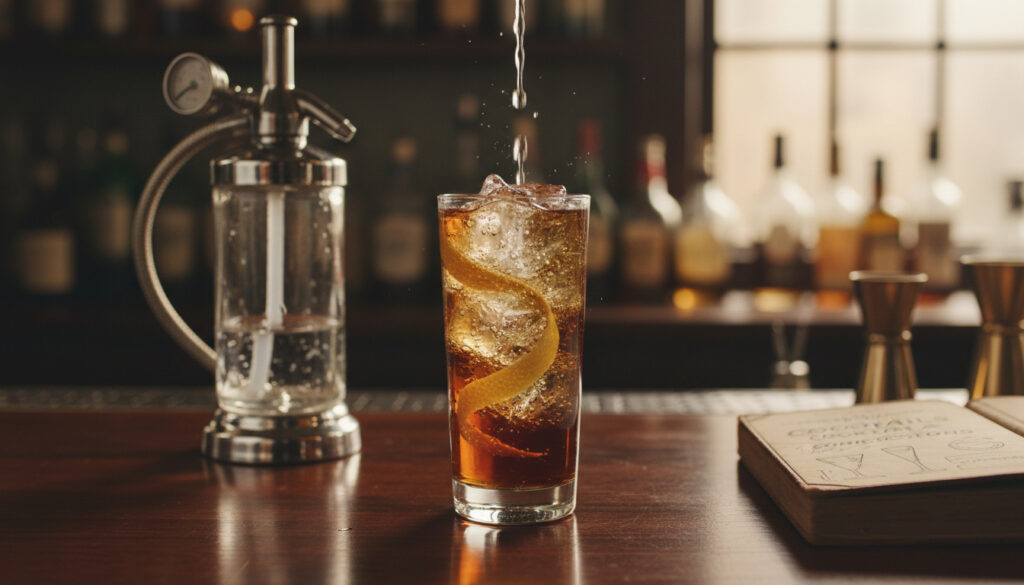
Scotch and Soda – History, Recipe and Expert Tips
The Scotch and soda represents perhaps the purest expression of whisky drinking simplicity. Combining Scotch whisky with carbonated water, this highball cocktail emerged from Victorian Britain to become a global standard for restrained elegance.
Unlike elaborate cocktails demanding precise measurements and obscure ingredients, the Scotch and soda relies on quality of components rather than complexity of preparation. The drink’s enduring appeal spans from 19th-century medical recommendations to contemporary Japanese bartending precision.
This guide examines the historical trajectory, technical preparation, and cultural significance of the classic highball, separating established facts from common misconceptions.
What Is a Scotch and Soda?
At its foundation, the Scotch and soda consists of two ingredients: Scotch whisky and soda water or sparkling water. The preparation requires no shaking, no elaborate garnishes, and no specialized tools beyond a glass and a stirring implement. The highball family encompasses this straightforward approach to spirits service.
- Global Scotch sales surged from 1.7 million bottles in 1874 to 19.5 million by 1895 during the drink’s initial popularization.
- Medical endorsements in the 1880s, including recommendations from Queen Victoria’s physician, accelerated adoption among British upper classes.
- The phylloxera epidemic devastating French brandy vineyards created a vacuum that blended Scotch readily filled.
- Preparation techniques vary from gentle stirring to simply pouring, with no standardized mixing method mandated.
- Contemporary variations include the Japanese highball (haibōru) and the colonial-era “stengah.”
- Caloric content remains relatively low compared to mixed drinks containing sugars or juices.
- The drink functions effectively as both aperitif and digestif across various dining contexts.
| Aspect | Details |
|---|---|
| Origin Era | Late 19th century Britain |
| Primary Spirit | Blended Scotch whisky (traditionally) |
| Mixer | Soda water, sparkling water, or mineral water |
| Calories (standard) | 100–150 per serving |
| Alcohol Content | ~70 calories per ounce from alcohol |
| Carbohydrates | Zero (no added sugars) |
| Glass Type | Highball (tall, narrow) |
| Serving Temperature | Chilled, with or without ice |
| Key Historical Brand | Apollinaris mineral water |
| Colonial Variant | Stengah (equal parts whisky and soda) |
How to Make a Perfect Scotch and Soda
Preparation requires attention to temperature and carbonation preservation. While ratios remain subjective, methodology significantly impacts the final texture and effervescence.
Proportions and Ingredients
Standard builds begin with 1.5–2 oz of Scotch poured over ice in a highball glass, topped with 4–6 oz of chilled soda poured slowly down the side to preserve bubbles. Alternative methods suggest filling the glass with ice first, adding the whisky, then the soda, followed by one gentle stir to integrate without flattening the carbonation.
Chill the glass, Scotch, and soda water before assembly. Large, clear ice cubes minimize dilution while maintaining cold temperatures throughout consumption.
Glassware Selection
The highball glass—tall and narrow—serves the specific function of preserving carbonation while accommodating adequate ice and mixer volume. This vessel shape maintains chill and slows bubble dissipation compared to wide-mouthed alternatives.
Contemporary mixology trends, such as those documented in Twastia.com Trends in Australia – Key Insights for 2025, indicate a resurgence of interest in minimalist classic cocktails across international markets.
History and Origins of the Scotch and Soda
The drink gained traction during the 1880s as blended Scotch formulations lightened in character, shedding heavy peat notes that previously defined the spirit. This transformation made whisky palatable in social and lunch settings previously dominated by wine or French brandy.
The Phylloxera Crisis and Brand Substitution
A pivotal catalyst emerged from viticulture disaster. Phylloxera devastated French brandy quality, prompting British consumers to seek alternatives. Simultaneously, the rise of aerated waters provided a novel delivery mechanism that replaced traditional brandy-and-water combinations.
Medical Advocacy and Royal Approval
Contemporary medical publications played an unexpected role in popularization. The Lancet noted that aerated waters encouraged whisky consumption over brandy mixtures. By 1889, Queen Victoria’s doctor recommended whisky with Apollinaris mineral water, catalyzing the “Polly and Scotch” phenomenon among the aristocracy.
Commercial Promotion
Major blending houses recognized the opportunity. John Walker & Sons and Dewar’s promoted the combination alongside premium soda brands like Rosbach during the 1890s, establishing the template for modern whisky marketing.
Best Scotches, Sodas, and Variations
Component selection determines the final character. While personal preference ultimately dictates choices, certain guidelines optimize the experience.
Selecting the Whisky
Blended Scotch excels in this application due to its balanced, lighter profile. Mid-tier options featuring honeyed, citrus, or malt notes perform optimally. Young single malts function adequately, though heavily peated or oily 19th-century styles traditionally intended for hot toddies should be avoided.
Soda Water Selection
Options range from standard club soda to premium mineral waters. Apollinaris and Rosbach provided refined bubbles and silky texture historically, while contemporary club sodas or sparkling waters suffice for everyday preparation depending on desired mineral content.
No fixed ratio commands universal adherence. Adjust soda volume from a simple splash to several multiples of the whisky measure according to taste preferences and intended consumption pace.
International Variations
The Japanese Highball (haibōru) elevates the concept through precision engineering. Utilizing Suntory Kakubin or Scotch with high-pressure soda, practitioners employ pre-chilled glassware, hand-carved clear ice, and deliberate stirring techniques to emphasize refreshment.
The stengah—derived from Malay for “half”—emerged in the early 20th century British Empire utilizing equal parts whisky and soda over ice.
Creative adaptations incorporate fruit liqueurs, bitters, citrus elements, or specialty sparkling waters. Similar preparations exist using bourbon or Japanese whisky.
Pour soda slowly down the interior side of the glass rather than directly onto ice to maintain effervescence. Excessive stirring releases dissolved carbon dioxide, resulting in a flat, unappealing texture.
For those planning recreational activities, consulting the Perth Aqua Park – 2025 Tickets Prices Booking Guide provides logistical details unrelated to cocktail preparation but relevant to leisure scheduling.
When Did Scotch and Soda Emerge?
The development followed a clear trajectory from medicinal curiosity to mainstream acceptance.
- : Global Scotch sales recorded at 1.7 million bottles marking the baseline before widespread adoption.
- : The drink gains traction as blended Scotch lightens in flavor, appealing to lunch and social settings.
- : Queen Victoria’s physician recommends whisky with Apollinaris mineral water, legitimizing the combination medically.
- : Commercial blenders including John Walker & Sons and Dewar’s promote the drink alongside branded sodas.
- : Global sales reach 19.5 million bottles, representing explosive growth over two decades.
- : The “stengah” emerges in the British Empire, utilizing equal proportions.
- : American reports indicate three in four men consume Scotch with Apollinaris, signaling transatlantic adoption.
What Do We Know for Certain?
Distinguishing documented history from apocryphal origin stories clarifies the drink’s actual development.
Established Information
- Late 19th century British origin (specifically 1880s popularization)
- Medical endorsements, including The Lancet and royal physicians, accelerated adoption
- Phylloxera’s impact on French brandy directly influenced whisky market growth
- Blended Scotch dominates traditional preparations over single malts
- The stengah variation originated in the British Empire with specific Malay etymology
Remaining Uncertainties
- Specific individual inventor or first bartender remains unidentified
- Precise date of first creation predating the 1880s lacks documentation
- Original proportions used in earliest iterations remain speculative
- Exact timeline of when “Scotch and soda” became the dominant nomenclature versus “whisky and soda”
Cultural Significance and Modern Appeal
The drink’s persistence reflects its functional versatility. Unlike cocktails demanding specific occasions, the Scotch and soda serves equally as a luncheon accompaniment, an evening aperitif, or a digestif. Its low caloric content relative to sugar-laden mixed drinks appeals to contemporary health-conscious consumers, while its simplicity aligns with modern minimalist bartending movements.
The Japanese highball revival demonstrates the format’s adaptability to precision-focused drinking cultures. By treating the preparation as a technical discipline rather than a casual pour, Japanese bartenders elevated the humble two-ingredient drink to craft status without altering its fundamental composition through exacting standards.
Colonial associations, including the stengah’s imperial origins, add complex historical layers to an otherwise straightforward beverage. These cultural connotations, while not affecting the physical preparation, inform the drink’s narrative significance in post-colonial contexts.
Expert Perspectives and Historical Documentation
Contemporary accounts provide insight into the drink’s medical and social reception during its formative period.
The Lancet noted that aerated waters encouraged whisky over brandy-and-water, marking a significant shift in medical opinion regarding spirits consumption.
— Medical journal documentation, 1880s
By 1889, Queen Victoria’s doctor recommended whisky with Apollinaris mineral water, creating the ‘Polly and Scotch’ phenomenon that spread through British high society.
— Historical medical records
Blended Scotch excels for balance and lightness with soda, while mid-tier options with honeyed, citrus, or malt notes provide optimal results for contemporary preparations.
— Modern mixology analysis
Key Takeaways for Modern Drinkers
The Scotch and soda rewards quality over complexity. Select a blended Scotch with bright, honeyed characteristics rather than heavily peated expressions, pair with cold, high-quality soda water, and maintain chill through proper glassware and ice selection. Whether consumed as a casual refresher or studied through the lens of Japanese highball craftsmanship, the drink remains fundamentally accessible.
Frequently Asked Questions
What is the ideal Scotch-to-soda ratio?
Standard ratios range from 1:2 to 1:3 (whisky to soda), though personal preference ultimately determines proportions. Begin with 1.5–2 oz Scotch and 4–6 oz soda, then adjust according to desired strength and flavor intensity.
Can I use single malt Scotch in a Scotch and soda?
Young single malts work adequately, but avoid heavily peated or oily expressions traditionally intended for hot toddies. Blended Scotch generally provides better balance and lightness for this preparation.
What is a stengah?
The stengah represents a colonial-era variation utilizing equal parts whisky and soda over ice. The term derives from Malay for “half,” emerging in the early 20th century British Empire.
How many calories does a Scotch and soda contain?
A standard serving contains approximately 100–150 calories, derived almost entirely from the whisky alcohol content. Soda water adds zero calories, carbohydrates, fats, or proteins.
Is Scotch and soda suitable for beginners?
Yes. The soda water softens the whisky’s alcoholic heat without adding sweetness, making it an accessible entry point for those new to spirits. Start with higher soda ratios and adjust downward as palate familiarity develops.
What type of ice works best?
Large, clear ice cubes minimize dilution while maintaining proper temperature. Avoid crushed ice, which melts rapidly and over-dilutes the drink. Pre-chilling the glass reduces reliance on ice for cooling.
Can I add garnishes besides citrus?
While lemon or citrus twists remain standard, creative variations incorporate fruit liqueurs, bitters, or specialty sparkling waters. However, excessive additions transform the drink into a different cocktail entirely.
More related posts
 Charles Leclerc Girlfriend 2025: Who is Alexandra Saint Mleux
 Esteban Ocon: Career, Net Worth, Rivalry with Verstappen and More
 Married at First Sight 2026: Cast, Couples, Viewers & Updates
 Nova Peris: Olympic Gold Medalist, Senator, Indigenous Trailblazer
 Emma Hamilton: Nelson’s Lover, Daughter, and Death in Poverty
 Facials Near Me in Ireland: Prices, Best Spots & Reviews
 Scottie Pippen: Height, Net Worth, Jordan Feud & Current Life
 Fire Pit Ideas – Designs, DIY Builds and Safety Tips