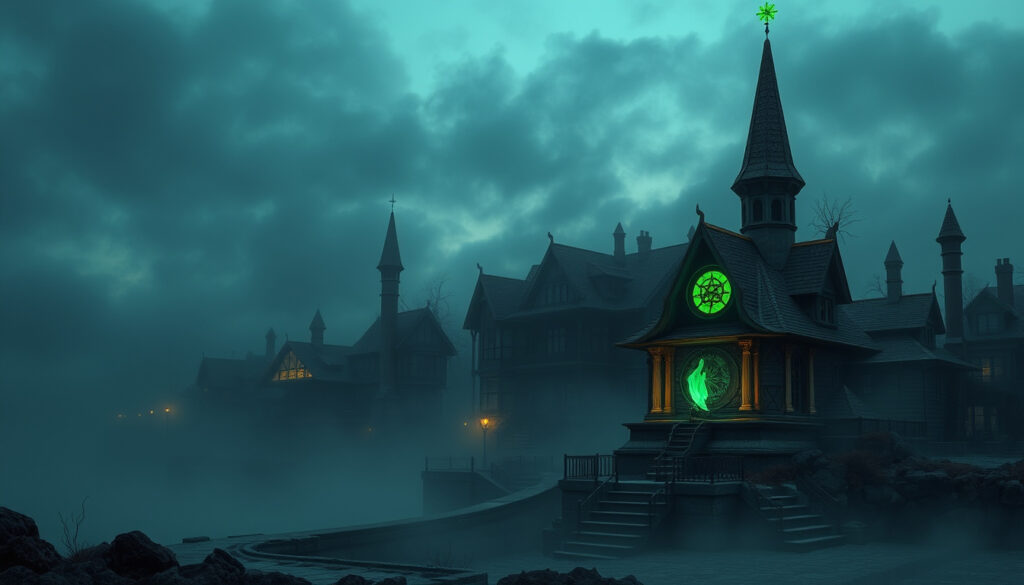
H.P. Lovecraft: Biography, Cosmic Horror & Controversy
If you’ve ever felt a shiver reading about ancient entities lurking beyond human comprehension, you’ve tasted the influence of H.P. Lovecraft—a writer whose personal fears and prejudices shaped an entire genre. Lovecraft crafted a mythology that still terrifies readers nearly a century later, but his legacy is tangled with documented racism and xenophobia.
Born: August 20, 1890 ·
Died: March 15, 1937 ·
Known for: Cthulhu Mythos, cosmic horror ·
Number of published stories: Approximately 70
Quick snapshot
- Lovecraft was born August 20, 1890, in Providence, Rhode Island (Britannica)
- He died on March 15, 1937, in Providence (Wikipedia)
- He created the Cthulhu Mythos (Wikipedia)
- Exact cause of death (some sources say starvation due to cancer) (Britannica)
- Full extent of his phobias (HPLovecraft.com)
- Whether he would have changed his views later in life (The Guardian)
- 1928: Published The Call of Cthulhu, introducing the Cthulhu Mythos (Wikipedia)
- Posthumous fame continues; Cthulhu Mythos expanded by other writers (Britannica)
- Ongoing debate about separating art from artist (The Guardian)
Six facts that define the man and his work, one pattern: Lovecraft’s life was as strange and isolated as the stories he wrote.
| Attribute | Detail |
|---|---|
| Full name | Howard Phillips Lovecraft |
| Born | August 20, 1890, Providence, Rhode Island |
| Died | March 15, 1937, Providence, Rhode Island |
| Genre | Weird fiction, horror, fantasy, science fiction |
| Known for | Cthulhu Mythos, cosmic horror |
| Notable work | The Call of Cthulhu |
What is H. P. Lovecraft’s most famous book?
Lovecraft’s most celebrated story is widely considered The Call of Cthulhu, first published in 1928. It introduced the Cthulhu Mythos, a shared universe of ancient cosmic entities that would become his defining legacy (Wikipedia).
The Call of Cthulhu
- The story is structured as a manuscript discovered after the protagonist’s death (Britannica)
- It centers on a monstrous entity that lies dreaming in the sunken city of R’lyeh
- Lovecraft’s fame as a writer increased after his death (Britannica)
At the Mountains of Madness
- Published in 1936, this novella recounts an Antarctic expedition uncovering pre-human ruins (Wikipedia)
- It is one of Lovecraft’s most ambitious works, blending science fiction with horror
The Shadow over Innsmouth
- Written in 1931 and published as a book in 1936 (Wikipedia)
- Many critics consider it his scariest story (The Guardian)
The implication: Lovecraft’s fame rests on a single story cycle that he never lived to see popularized.
What phobia did H. P. Lovecraft have?
Lovecraft suffered from multiple documented phobias—fear of the sea, cold, strangers, and the unknown—which seeped into his fiction. These anxieties were so intense that they shaped the core of his horror aesthetic (Britannica). His lifelong poor health prevented him from attending college and kept him mostly housebound.
Ophidiophobia (fear of snakes)
- Lovecraft’s letters mention a visceral revulsion to snakes, a common phobia he shared with many (HPLovecraft.com)
- This fear rarely appears directly in his writing, but the sense of creeping dread is constant
Nyctophobia (fear of the dark)
- The dark terrified Lovecraft; he described it as a realm where unknown horrors could hide
- This phobia became the foundation of his cosmic horror: fear of what lies beyond human perception
Fear of the unknown
- Lovecraft famously wrote: “The oldest and strongest kind of fear is fear of the unknown” (Supernatural Horror in Literature)
- This principle underlies every story he wrote, from Cthulhu to the Colour Out of Space
Lovecraft’s phobias weren’t just personal quirks—they became a literary engine that made his cosmic horror unforgettable. Yet they also fueled his xenophobia, as he projected fear of the “other” onto entire cultures.
Why this matters: Lovecraft’s phobias gave us the template for cosmic dread, but they also reveal a mind that saw threats everywhere—including in people who looked different.
Why is H. P. Lovecraft so famous?
Lovecraft’s fame grew after his death, not during his lifetime. He lived in seclusion and poverty, publishing mostly in pulp magazines like Weird Tales (Wikipedia). Today he is hailed as the father of cosmic horror, and his work has inspired authors such as Stephen King (Rolling Stone).
Creation of the Cthulhu Mythos
- Lovecraft created a shared universe of ancient gods and forbidden knowledge (Wikipedia)
- Other writers later expanded the mythos, cementing his influence
Influence on modern horror
- Stephen King has repeatedly called Lovecraft the “20th century’s greatest writer of the horror story” (Rolling Stone)
- His ideas appear in films, games, and books from Alien to Stranger Things
Posthumous recognition
- Lovecraft’s work was largely forgotten at his death in 1937 (Britannica)
- A posthumous revival in the 1960s and 1970s turned him into a cult figure
The pattern: Lovecraft’s fame is almost entirely posthumous—a paradox that makes his legacy both impressive and ironic.
What is Lovecrafts’ scariest story?
Critics often point to The Shadow over Innsmouth as Lovecraft’s most terrifying work, due to its gradual buildup and disturbing reveal (The Guardian). But others argue The Colour Out of Space delivers pure atmospheric horror.
The Shadow over Innsmouth
- The story follows a traveler discovering a coastal town whose inhabitants interbreed with fish-like creatures (Wikipedia)
- Its horror twists on the idea that the protagonist himself is turning into one of the creatures
The Colour Out of Space
- A meteorite lands on a farm, slowly corrupting the land and family (Wikipedia)
- Praised for its inexplicable terror—the “colour” is something beyond human experience
The Dunwich Horror
- Set in the fictional town of Dunwich, Massachusetts, it involves a half-human monster and forbidden rites (Britannica)
- Lovecraft’s most straightforward horror narrative, with a visible monster
What this means: Lovecraft’s scariest stories work not by showing the monster, but by implying something far worse just out of sight.
Why is H. P. Lovecraft so controversial?
Lovecraft’s racism and xenophobia are well documented. He wrote openly bigoted letters, used grotesque racial caricatures in his stories, and even named his cat a racial slur (Bowdoin Orient). A Brown University Library exhibition explored how his “racial imaginaries” influenced his fiction (Brown University Library).
Racism and xenophobia in his writing
- Lovecraft feared racial mixing and cultural integration, themes visible in stories like The Shadow over Innsmouth (Bowdoin Orient)
- His depiction of non-white characters is often derogatory and stereotypical
The naming of his cat
- Lovecraft owned a cat named with a racial slur, a fact that surfaces in modern debates (Bowdoin Orient)
- This detail is often cited as evidence of his deep-seated prejudice
Personal beliefs vs. literary legacy
- Scholars disagree whether to separate the art from the artist (The Guardian)
- Some readers refuse to engage with his work; others argue his cosmic horror framework transcends his personal flaws
Fans of cosmic horror must decide: can you love the creation while condemning the creator? Lovecraft’s legacy forces that question every time a new fan discovers Cthulhu.
The paradox: Lovecraft’s horror of the “other” is now used as a mirror to examine our own biases.
Timeline of key events
- : Born in Providence, Rhode Island (Britannica)
- : First professional story published, “The Tomb” (Wikipedia)
- : Published “The Call of Cthulhu” (Wikipedia)
- : Published “The Shadow over Innsmouth” (Wikipedia)
- : Died of cancer with possible starvation (HPLovecraft.com)
- : Posthumous rise in fame; Cthulhu Mythos expanded by other writers (Britannica)
Confirmed facts
- Birth and death dates (Britannica)
- Publication history (Wikipedia)
- Racist statements in letters (Bowdoin Orient)
- Cat’s name contained a racial slur (Bowdoin Orient)
What’s unclear
- Exact cause of death (some sources say starvation due to cancer) (Britannica)
- Full extent of his phobias (HPLovecraft.com)
- Whether he would have changed his views later in life (The Guardian)
- Exact number of stories he wrote (estimated around 70) (Wikipedia)
Voices on Lovecraft
“The oldest and strongest emotion of mankind is fear, and the oldest and strongest kind of fear is fear of the unknown.”
– H.P. Lovecraft, Supernatural Horror in Literature (HPLovecraft.com)
“H.P. Lovecraft is the 20th century’s greatest writer of the horror story.”
– Stephen King, quoted in Rolling Stone
Lovecraft’s cosmic horror gave us a vocabulary for confronting the vast, indifferent universe. But his legacy also forces readers to grapple with uncomfortable truths about the man behind the mythos. For any modern fan of the genre, the choice is clear: acknowledge the darkness in the creator, or risk letting it remain unexamined.
biographics.org, en.wikipedia.org, laterpress.com, youtube.com, reddit.com, youtube.com, reddit.com
His influence extends to modern media, including the TV series Lovecraft Country, which reimagines his cosmic horror through a racial justice lens.
Frequently asked questions
What is cosmic horror?
Cosmic horror, also called Lovecraftian horror, emphasizes the insignificance of humanity against vast, unknowable forces. It prioritizes dread and atmosphere over jump scares (Wikipedia).
Did Lovecraft write novels?
No—most of his work consists of short stories and novellas. His longest works are The Case of Charles Dexter Ward and At the Mountains of Madness (Britannica).
What is the Necronomicon?
A fictional grimoire created by Lovecraft, often cited by other writers. It does not exist as a real book (Wikipedia).
Who was Lovecraft’s main collaborator?
Lovecraft corresponded extensively with other writers, including August Derleth, who later expanded the Cthulhu Mythos (Wikipedia).
What are Lovecraft’s most famous quotes?
“The oldest and strongest kind of fear is fear of the unknown” is his most quoted line, from the essay Supernatural Horror in Literature.
How did Lovecraft’s childhood affect his writing?
Frequent illness, a sickly constitution, and the early deaths of his parents led to a reclusive life that fueled his imagination (HPLovecraft.com).
More related posts
 Fire Pit Ideas – Designs, DIY Builds and Safety Tips
 Agnes Moorehead: Cause of Death, Net Worth & Legacy
 Danny Ramirez: Age, Relationship & Career Facts
 Weather Alice Springs – Forecast, Radar and Best Time to Visit
 Stella McCartney: Biography, Net Worth & Latest News
 Toyota Prado 2024 Price in Ireland: From €63,319
 Scottie Pippen: Height, Net Worth, Jordan Feud & Current Life
 Taylor Swift Facts & Rumors: What’s Verified