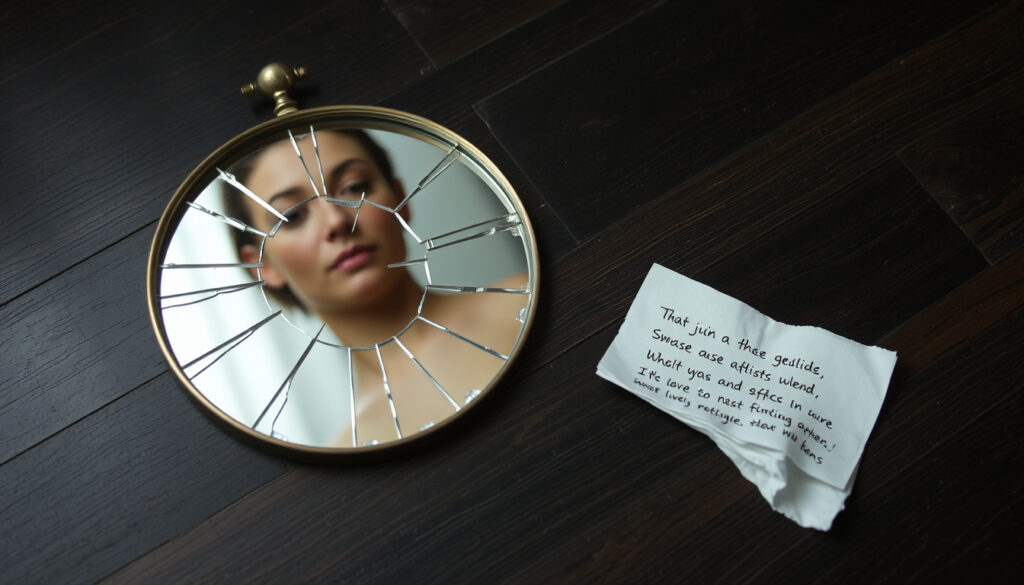
Narcissistic Traits: Signs, Red Flags, and Apology Patterns
You’ve probably met someone who seems utterly convinced they’re the most important person in the room. It might be a colleague who takes credit for everything, a partner who rarely asks how your day was, or a friend who turns every conversation back to themselves. That pattern, when it moves from occasional self-focus into a rigid way of relating to the world, is what clinicians study as narcissistic traits — and at its extreme, narcissistic personality disorder (NPD), which affects up to 6.2% of U.S. adults. This guide walks through the clinical criteria, the everyday red flags, and the specific language patterns — including how a narcissist apologizes — so you can tell the difference between a rough patch and a personality pattern that requires professional attention.
NPD prevalence in U.S. adults: Up to 6.2% ·
DSM-5 criteria for NPD: 9 traits, 5 required ·
Male-to-female ratio among diagnosed: 50-75% male ·
Median age of onset: Late teens to early 20s ·
Common comorbidity: Depression, anxiety, substance use
Quick snapshot
- Exaggerated sense of self-importance (Mayo Clinic)
- Downplays others’ achievements (StatPearls / NCBI)
- Expects to be recognized as superior (Mayo Clinic)
- Constant validation seeking (StatPearls / NCBI)
- Requires praise and compliments (Cleveland Clinic)
- Distressed by perceived slights (Cleveland Clinic)
- Unwilling to recognize others’ feelings (Cleveland Clinic)
- Uses people for personal gain (StatPearls / NCBI)
- Dismisses emotional reactions (Mayo Clinic)
- Expects special treatment (Harvard Health Publishing)
- Gets angry when needs aren’t met (Cleveland Clinic)
- Takes advantage of others (StatPearls / NCBI)
Grandiosity and fragile self-esteem are two sides of the same coin. Researchers describe pathological narcissism as a personality system built to protect a weak core self — which is why criticism triggers rage instead of reflection.
The following table summarizes key facts about NPD.
| Fact | Value |
|---|---|
| DSM-5 code | 301.81 (F60.81) |
| Lifetime prevalence | 0.5% to 5% in community samples (National Institute of Mental Health) |
| Core trait cluster | Grandiosity, need for admiration, lack of empathy (Mayo Clinic) |
| Diagnostic requirement | 5 of 9 DSM-5 criteria, pervasive across contexts (National Institute of Mental Health) |
| Treatment approach | Psychotherapy (no FDA-approved medications) (Harvard Health Publishing) |
| Common setting | Clinical, workplace, romantic relationships |
What are the five main traits of a narcissist?
“Narcissistic personality disorder is a mental health condition in which people have an unreasonably high sense of their own importance.” — Mayo Clinic
The DSM-5-TR lists nine criteria for narcissistic personality disorder, and a diagnosis requires five or more. The five most often cited in everyday conversation overlap with the core clinical picture described by the National Institute of Mental Health: a pervasive pattern of grandiosity, need for admiration, and lack of empathy beginning by early adulthood.
Grandiose sense of self-importance
- Exaggerates achievements and talents (StatPearls / NCBI)
- Expects to be recognized as superior without corresponding accomplishments
The person may dominate conversations with stories of success and become visibly irritated when someone else gets attention. This isn’t occasional boasting — it’s a consistent pattern of inflating one’s own value while dismissing others’ contributions.
Preoccupation with fantasies of unlimited success or power
- Spends excessive time imagining ideal scenarios (Cleveland Clinic)
- May have delusions of grandeur in severe cases
This isn’t about healthy ambition — the fantasies replace real-world effort. A person might describe the business they’re going to build, the fame they’ll achieve, or the perfect relationship they deserve, while making few concrete steps toward any of it.
Belief in one’s own special and unique status
- Believes they can only be understood by other special people (Mayo Clinic)
- Seeks relationships with prestigious or high-status individuals
Clinicians describe this as “VIP thinking.” The person expects doors to open for them that remain closed for others, and they become confused or angry when they don’t.
Need for excessive admiration
- Requires constant praise and validation (StatPearls / NCBI)
- Suffers acutely from perceived slights or criticism
This is the engine that drives much of the behavior. Without a steady supply of admiration, the person may become sullen, angry, or withdrawn. The demand for validation can exhaust partners, colleagues, and friends.
Lack of empathy
- Unwilling to recognize or identify with others’ feelings (Mayo Clinic)
- Views people as instruments to meet needs
This is the trait that creates the most pain for people around the narcissist. When someone expresses hurt, the narcissist doesn’t feel remorse — they see the expression as an attack or an inconvenience.
The pattern: These five traits work together. Grandiosity creates the need for admiration. The need for admiration makes lack of empathy useful — if you don’t care about others’ feelings, you can keep demanding praise without guilt.
TL;DR: The five core traits — grandiosity, fantasy preoccupation, belief in uniqueness, need for admiration, and lack of empathy — form a self-protective system that makes genuine relationships one-sided.
What are the 7 signs of a narcissist?
The remaining four DSM-5 criteria flesh out the full clinical picture. Adding them to the five above gives you the seven behavioral signs that clinicians and loved ones most often encounter.
Having even a few of these signs does not automatically indicate NPD. The pattern must be enduring, inflexible, and cause significant distress or impairment — and it must show up across many settings, not just in one stressful relationship. This is the key distinction between a personality disorder and temporary self-centeredness.
Sense of entitlement
The person expects automatic compliance with their expectations, whether it’s cutting in line, demanding special treatment at work, or expecting a partner to drop everything for them. The Cleveland Clinic lists entitlement as a core symptom, and it frequently leads to conflict when reality doesn’t match the expectation.
Interpersonally exploitative behavior
Using others for personal gain — money, status, sex, labor — without regard for the other person’s needs. Exploitation is what turns ordinary self-interest into a relational harm pattern (Cleveland Clinic).
Envy of others or belief others envy them
Two sides, one coin. The narcissist may openly resent others’ success (or insist that others envy them). This envy drives a competitive edge that makes collaboration difficult (Cleveland Clinic).
Arrogant attitudes or behaviors
Condescension, dismissiveness, and a habit of talking down to people. This is the visible layer of the grandiosity core — the person acts like they’re better than everyone else, and they expect others to agree (Cleveland Clinic).
How does a narcissist apologize?
“People with NPD have a grandiose sense of self-importance, a need for excessive admiration, and a lack of empathy that makes genuine apologies rare.” — Cleveland Clinic
If you’ve ever received an apology from someone with strong narcissistic traits, you may have noticed something off. The words sound right, but the feeling isn’t there. Research from PubMed Central on pathological narcissism describes apology behavior in narcissistic patterns as “instrumental rather than reparative” — the goal is to restore image or reduce consequences, not to repair the relationship.
3 examples of a narcissistic apology
- “I’m sorry you feel that way” — This is the classic non-apology. It puts the problem on the other person’s emotional reaction rather than the behavior that caused it. The speaker never takes responsibility for the action itself.
- “I’m sorry, but you made me do it” — Deflection disguised as apology. The admission of fault is immediately undermined by blame-shifting. The PubMed Central article connects this to the fragile self-esteem that sits beneath grandiosity: admitting a genuine mistake threatens the entire self-image.
- “I apologize if I offended you” — The “if” creates a loophole. It implies that the offense might not have happened, or that the offense was the other person’s choice to be offended. No ownership, no repair.
The implication: A genuine apology identifies the specific action, expresses regret for the harm caused to *that person*, and offers a plan to change. A narcissistic apology does none of those things — it protects the speaker’s image and tries to close the topic quickly.
What is the biggest red flag of a narcissist?
Researchers and clinicians point to two red flags that consistently appear across relationships, work settings, and clinical evaluations. The first is lack of empathy paired with the need for admiration. The Mayo Clinic describes a person who “has difficulty recognizing the feelings and needs of others” while simultaneously requiring constant praise. When someone doesn’t care about your feelings but demands your admiration, the relationship is necessarily one-sided.
The second red flag is exploitative behavior — using others as tools. The Cleveland Clinic includes this as a key symptom: “taking advantage of others to achieve their own ends.” This might look like a partner who expects you to manage their schedule, a colleague who takes credit for your work, or a boss who treats staff as disposable.
The catch: The hardest part about these red flags is that they can be subtle at first. Early in a relationship — romantic, professional, or friendship — the narcissist’s self-confidence can look like strength, and their need for admiration can look like charm. The pattern reveals itself over time, especially when conflicts arise or when the person doesn’t get what they want.
What are the three phrases narcissists use?
Language patterns provide some of the most actionable clues. Research on pathological narcissism (PubMed Central) and clinical observations from the Mayo Clinic point to three common phrases that minimize, blame, or gaslight.
- “You’re too sensitive.” This phrase dismisses the other person’s emotional reaction and reframes appropriate hurt as a personal flaw. It shifts the focus from the speaker’s behavior to the listener’s emotional response.
- “I’m the only one who can do this.” Grandiosity expressed as competence. The person positions themselves as irreplaceable, which serves both the need for admiration and the justification for controlling decisions.
- “It’s your fault I acted that way.” The core of blame-shifting. This phrase denies personal agency and reframes harmful behavior as a response to the other person’s actions.
These phrases don’t appear in every interaction, but when they cluster around conflict conversations, they’re a strong signal that the other person is protecting their self-image rather than seeking resolution.
For partners and colleagues, the verbal pattern matters more than any single incident. One “you’re too sensitive” can be a bad moment. A consistent pattern of deflecting blame and minimizing feelings is the behavior to watch.
The pattern: When these phrases appear regularly, they indicate a person more interested in protecting their self-image than in resolving conflict.
What should you never say to a narcissist?
Understanding how narcissistic traits operate can help you avoid phrases that trigger extreme reactions — known as narcissistic injury. The clinical literature (StatPearls / NCBI) describes how the grandiose self-image is actually fragile: when it’s threatened, the person may lash out, become vindictive, or withdraw completely.
- Avoid direct criticism of their character. Saying “you’re selfish” attacks the core self-image. If you need to address a problem, focus on the specific action: “When you said that, I felt dismissed.”
- Avoid exposing contradictions in their self-narrative. Pointing out that their story doesn’t match the facts can provoke an intense defensive reaction.
- Avoid showing vulnerability they might exploit. Sharing an insecurity or weakness can be used later to manipulate or devalue you. This is part of the exploitative pattern the Cleveland Clinic describes.
This doesn’t mean you should walk on eggshells — but knowing what triggers narcissistic injury can help you set boundaries without escalating conflict. De-escalation strategies recommended by clinicians include using “I” statements, avoiding emotional reactivity, and staying factual rather than emotional.
For anyone dealing with a narcissistic partner or boss, the choice is between constant accommodation and conflict. Neither is pleasant, but recognizing the pattern is the first step to deciding whether the relationship is worth the cost.
What are mild narcissistic traits vs full NPD?
Mild narcissistic traits are common — many people have moments of self-centeredness, competitive thinking, or need for validation without meeting any criteria for a personality disorder. The National Institute of Mental Health emphasizes that a personality disorder diagnosis requires the traits to be “enduring, inflexible, and cause clinically significant distress or impairment.”
| Trait level | Examples | Impact on relationships |
|---|---|---|
| Mild (subclinical) | Occasional boasting, asking for reassurance, competitive at work | Usually manageable; person can apologize and adjust |
| Moderate trait pattern | Regular need for admiration, difficulty handling criticism, entitled behaviors | Creates friction; relationships may be strained |
| Full NPD (clinical) | Pervasive grandiosity, exploitative behavior, lack of empathy across contexts | Significant impairment; relationships often unstable or damaged (NIMH) |
One useful distinction: people with mild traits can usually recognize when they’ve hurt someone and adjust their behavior, even if reluctantly. People with full NPD may not be able to recognize the harm at all, because their self-protection system blocks the feedback.
What this means: Calling someone a narcissist isn’t a casual label. If you see patterns that worry you — the three phrases, the entitlement, the lack of empathy — it can help to ask not “do they have NPD?” but “does this pattern create consistent harm in my life?” The answer to that question matters regardless of the clinical diagnosis.
charliehealth.com, en.wikipedia.org, theravive.com, youtube.com, huffpost.com, mayoclinic.org
Frequently asked questions
How is narcissistic personality disorder diagnosed?
NPD is diagnosed by a mental health professional using the DSM-5-TR criteria. The clinician assesses whether the person shows at least 5 of 9 traits — including grandiosity, need for admiration, lack of empathy, entitlement, and exploitative behavior — and whether those traits are enduring, inflexible, and cause significant impairment (National Institute of Mental Health).
Is narcissism treatable?
Yes, though it’s challenging. Psychotherapy — particularly modalities like transference-focused therapy, schema therapy, and mentalization-based therapy — can help. There are no FDA-approved medications for NPD itself, though comorbid conditions like depression or anxiety are often treated with medication (Harvard Health Publishing).
Can someone have narcissistic traits without having NPD?
Absolutely. Narcissistic traits exist on a spectrum. Occasional self-centeredness, competitiveness, or need for validation doesn’t meet the threshold for a disorder. The key is pervasiveness and impairment: NPD requires a pattern that is inflexible and causes significant distress or dysfunction (National Institute of Mental Health).
What causes narcissistic personality disorder?
The causes aren’t fully understood. Research points to a combination of genetic predisposition, childhood environment (excessive praise or neglect), and temperament. The Mayo Clinic notes that the exact cause is unknown, but both biological and psychological factors play a role.
How do you deal with a narcissistic partner?
Clinicians recommend setting firm boundaries, avoiding emotional reactivity, and limiting your expectation of empathy. It can help to communicate using clear “I” statements and to avoid engaging in arguments about who is right. Many partners find therapy helpful — both individually and, if the partner is willing, as a couple (Cleveland Clinic).
Are narcissists aware of their behavior?
It varies. People with grandiose narcissism often don’t see their behavior as problematic — they genuinely believe they are superior and entitled to special treatment. Those with vulnerable narcissism may be aware of relationship problems but attribute them to others’ jealousy or unfairness (PubMed Central on pathological narcissism).
What is the difference between narcissism and self-confidence?
Self-confidence involves a realistic belief in one’s abilities without needing to devalue others. Narcissism involves an inflated sense of importance, a constant need for admiration, and a lack of empathy. Confident people can accept criticism and celebrate others’ successes; people with narcissistic traits often cannot (Harvard Health Publishing).
Related reading: Bethany Joy Lenz: Cult, Divorce, Feuds, and New Book Explained · Taylor Swift: Facts, Rumors, and Verified Info
Editor’s note: This guide synthesizes clinical criteria from the DSM-5-TR and peer-reviewed research with behavioral observations from mental health institutions. It is not a diagnostic tool. If you’re concerned about your own or someone else’s mental health, a qualified mental health professional can provide a proper evaluation.
More related posts
 Facials Near Me in Ireland: Prices, Best Spots & Reviews
 H.P. Lovecraft: Biography, Cosmic Horror & Controversy
 Neil Finn: Biography, Fleetwood Mac Status & 2026 Plans
 Aimee Lou Wood: Natural Teeth, Career & Personal Life
 Best Online Video Editor: Free No Watermark Tools
 Agnes Moorehead: Cause of Death, Net Worth & Legacy
 Diane Farr: What She’s Doing Now, Voice Loss & Net Worth
 Emily Brontë: Life, Works, and Lasting Legacy