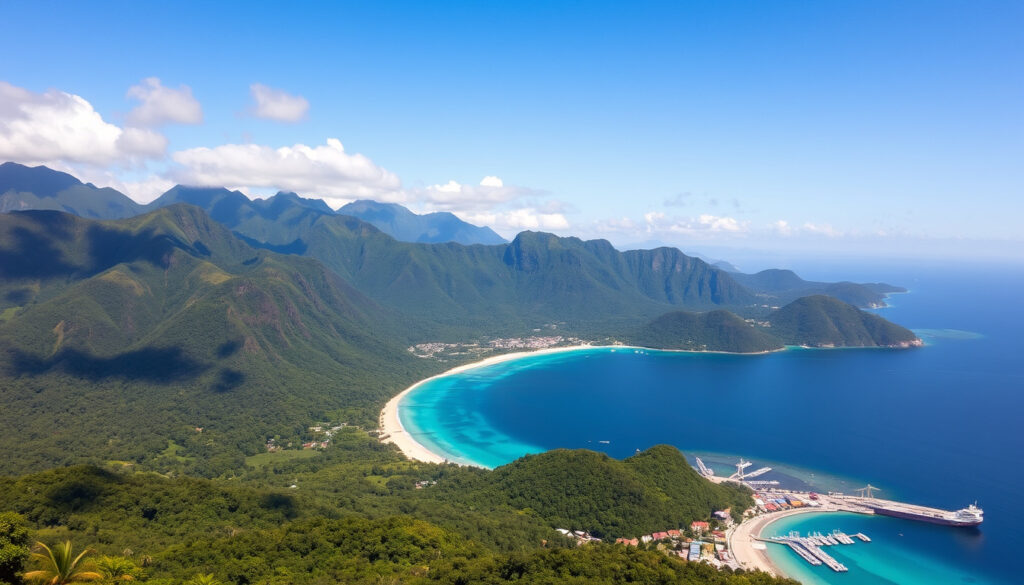
Papua New Guinea: Safety, Economy & Travel Guide 2024
Papua New Guinea sits at the edge of the world in more ways than one. The country’s western half shares a landmass with Indonesia, while its eastern half forms the second-largest island on Earth — yet it hosts one of the planet’s most extraordinary concentrations of human difference. More than 800 languages are spoken here across fewer than 9 million people. Whether you’re drawn by the promise of remote diving, the Kokoda Track, or a genuine encounter with Indigenous cultures, PNG rewards preparation. But it also demands realism about what that preparation must cover.
Capital: Port Moresby ·
Population: 8.9 million ·
Area: 462,840 sq km ·
Languages: English, Hiri Motu, Tok Pisin ·
Currency: Kina (PGK)
Quick snapshot
- 462,840 sq km area (Britannica)
- Eastern half of New Guinea island (Britannica)
- Scattered Pacific islands (Britannica)
- Resource exports drive GDP
- Low per capita income despite richness
- Ranked 126th in Economic Complexity Index
- 800+ languages, among world’s highest
- Diverse tribal groups
- Traditional festivals and singsing
- Diving, trekking, cultural tourism
- High safety advisories from governments
- Visa required for most visitors
The table below consolidates essential facts about Papua New Guinea into a single reference point.
| Fact | Detail |
|---|---|
| Capital | Port Moresby |
| Population | 8.9 million |
| Area | 462,840 sq km |
| Independence | 1975 |
| Currency | Kina |
| Official Languages | English, Hiri Motu, Tok Pisin |
Is Papua New Guinea safe for tourism?
The short answer from three major English-speaking governments is: exercise serious caution. Australia’s Department of Foreign Affairs advises exercising a high degree of caution overall due to high levels of serious crime. Canada’s government recommends avoiding non-essential travel, citing crime, inter-ethnic violence, and civil unrest as primary concerns. The U.S. State Department issued a Level 3 “Reconsider Travel” advisory as of April 29, 2025, citing crime, civil unrest, and piracy. Travel Guard’s 2026 Security Risk Map classifies PNG’s overall risk level as moderate — though that designation can mask sharp localized contrasts.
Crime risks
Violent crime in PNG includes sexual assault, carjackings, home invasions, and armed robberies, which authorities describe as common rather than exceptional. Carjacking is the most frequent serious crime affecting foreigners in Port Moresby, typically occurring at intersections or when vehicles are stationary, according to Epic Expeditions, a PNG-based tour operator with extensive on-ground experience. The Government of Canada Travel Advisory pinpoints specific carjacking hotspots: the Two-Mile and Nine-Mile settlement areas in Port Moresby, and the highway between Lae and Lae Nadzab Airport. Violent attacks on vehicles on the Highlands Highway occur most frequently between Goroka and Kainantu.
Raskol gangs in Port Moresby drive much of this opportunistic crime. Port Moresby has experienced rapid urbanization in recent decades, leading to sprawling settlements, high youth unemployment, and the rise of these criminal networks, which Epic Expeditions characterizes as typically driven by economic desperation. Criminals often use bush knives (machetes) and guns, including homemade weapons, according to Smartraveller.
Health concerns
Healthcare availability in PNG is inconsistent. The U.S. State Department notes that services are difficult to obtain outside Port Moresby, and pharmaceuticals are often scarce or unavailable. Emergency medical facilities are not established at many tourism sites, creating significant issues if tourists are involved in accidents, according to a report from the Papua New Guinea National Research Institute. Tourism operators surveyed for the report confirmed safety and security concerns, with no proper security fencing or services at many sites.
Travel advisories
Government advisories use a tiered system. The U.S. State Department designates the Highlands Region (excluding Mt. Hagen and Goroka) as Level 4 “Do Not Travel” due to heightened risk of civil unrest from tribal violence. Areas near the Panguna Mine on Bougainville Island are also Level 4, citing risk of violence from civil unrest tied to the long-running Bougainville conflict. Local authorities have declared states of emergency with measures including bans on alcohol sales, expanded police powers including lethal force authorization, and nightly curfews from 6 pm to 6 am, per the Government of Canada advisory.
Travelers who disregard these advisories face genuine safety risks, particularly in urban areas where emergency response times can be dangerously long.
Road conditions throughout PNG are poor — hazards include poorly maintained vehicles, drunk drivers, and roads in disrepair. During the rainy season, flash floods and landslides can make roads impassable. Public buses and taxis are poorly maintained and are common targets for criminals, according to the Canadian advisory.
Is Papua New Guinea a rich or poor country?
This question cuts to the heart of PNG’s central paradox. The country sits on enormous natural wealth — gold, copper, oil, gas — yet ranks among the world’s lower-income economies by per capita measures. Its Economic Complexity Index ranking of 126th out of roughly 180 countries, according to the Atlas of Economic Complexity, reflects an economy still heavily dependent on raw resource extraction with limited downstream processing or diversified exports.
Economic indicators
Resource exports form the backbone of PNG’s formal economy. The liquefied natural gas (LNG) sector, centered on the Papua LNG and PNG LNG projects, generates the largest export revenues. Agriculture employs the majority of the workforce but generates relatively low value per worker. The country imports significantly more than it exports in non-resource categories, creating structural trade deficits.
Poverty levels
GDP per capita figures place PNG well below regional averages for the Pacific. The informal economy — subsistence farming, local trade, and traditional exchange — plays a far larger role in daily life than official statistics capture. Poverty indicators correlate strongly with geographic isolation; communities in the Highlands and outer islands face greater material deprivation than urban Port Moresby residents, though even the capital lacks basic infrastructure in many neighborhoods.
ECI ranking context
The Economic Complexity Index measures not just wealth but the sophistication and diversity of what a country produces and exports. PNG’s position near the bottom reflects limited manufacturing, minimal processed food exports, and an export profile dominated by crude materials. Devpolicy Blog, a publication focused on PNG and Pacific development issues, has analyzed how this structural position constrains government revenue and service delivery capacity.
Natural resource wealth does not automatically translate to broad-based prosperity. PNG’s governance challenges mean that resource revenues often fail to reach communities outside extraction zones or Port Moresby’s formal economy.
Is Papua New Guinea part of Asia or Australia?
This is one of the most commonly searched questions about PNG, and the answer lies in the distinction between geography and geopolitics. Papua New Guinea occupies the eastern half of New Guinea island in the southwestern Pacific Ocean. The western half — West Papua and Papua provinces — belongs to Indonesia and thus to Asia. PNG itself is not part of Asia or Australia geographically. It is the dominant nation of the region called Oceania.
Geographic location
New Guinea sits just south of the equator, north of Australia, and east of Indonesia’s Papua provinces. The island straddles the boundary between the Asian continental shelf and the Australian continent, but New Guinea’s landmass technically sits on the Sahul continental shelf alongside Australia. This creates the unusual situation where the world’s second-largest island is shared between two continents’ geographic definitions.
Regional affiliation
Internationally, PNG is a member of the Pacific Islands Forum and is grouped with Melanesian nations (Fiji, Solomon Islands, Vanuatu, New Caledonia). This “Melanesian” classification is both geographic and cultural — the peoples of this region share certain linguistic and cultural features distinct from Polynesia to the east or Micronesia to the north. The country’s closest developed neighbor is Australia, which administered PNG under a UN trust mandate until independence in 1975.
Oceania membership
Geopolitically, PNG belongs to Oceania — the umbrella term for the Pacific islands and Australasia. Within Oceania, PNG is by far the largest country by area and population, making it a regional power despite its development challenges. The country maintains strong institutional ties to Australia, New Zealand, and the broader Pacific community while engaging actively with Asian partners, particularly through APEC and ASEAN-related forums.
PNG’s location at the crossroads of Asian and Australian geographic definitions makes it uniquely positioned in Oceania, though travelers should factor in regional travel safety considerations that vary significantly from neighboring countries.
What are the main problems in Papua New Guinea?
Addressing PNG’s challenges requires separating structural issues from acute crises. Law and order, governance, infrastructure, and social inequality represent the most persistent problem areas. The Papua New Guinea National Research Institute has documented how these challenges compound each other, with tourism development particularly affected.
Political issues
Corruption remains endemic to PNG’s political system. Public funds allocated for infrastructure, health, and education frequently fail to reach intended recipients. The Devpolicy Blog has analyzed how resource revenues flow through political networks rather than driving broad development. Limited state capacity means that even basic functions — road maintenance, police patrol, court scheduling — operate inconsistently outside Port Moresby.
Infrastructure gaps
Road access to tourism sites in PNG is very poor, causing tourists to cancel travel plans and preventing local people from making sales, according to the PNG National Research Institute report. Domestic airfares are high, contributing to overall travel costs and limiting tourism accessibility. The country lacks the “banana pancake trail” infrastructure that makes independent travel feasible in neighboring Southeast Asia, as Epic Expeditions notes. There is no reliable public transport comparable to what’s available in much of the region.
Social challenges
Youth unemployment in Port Moresby drives urbanization pressures, with rapid settlement expansion overwhelming municipal services. Crime statistics reflect this pressure directly — Raskol gang activity correlates with areas of highest unemployment. Gender-based violence rates are among the highest in the Pacific region, and women’s safety remains a significant concern both socially and for female travelers. Accommodation costs are very expensive with no cheap accommodation options available for tourists, per the PNGNRI report.
Tourism operators report that safety concerns directly limit their ability to expand services, creating a cycle that perpetuates PNG’s isolation from mainstream travel circuits.
What should I avoid in PNG?
Knowing where not to go matters as much as knowing where to go in PNG. Certain areas carry explicit government warnings, while others present risks that require specific behavioral precautions. The following guidelines reflect combined advisories from the U.S. State Department, Australian Smartraveller, and Canadian travel authorities.
High-risk areas
Avoid the Highlands Region excluding Mt. Hagen and Goroka — the U.S. State Department designates this a Level 4 “Do Not Travel” zone due to tribal violence and civil unrest. The Panguna Mine area of Bougainville Island is similarly Level 4. Within Port Moresby, the Two-Mile and Nine-Mile settlement areas are carjacking hotspots — avoid driving through these areas, particularly after dark. The segment of the Highlands Highway between Goroka and Kainantu is a documented violence corridor; avoid overland travel on this route.
Cultural faux pas
PNG’s tribal societies operate on protocols that outsiders can inadvertently violate. Photography of ceremonies, Initiation rites, or mourning practices without permission is considered deeply disrespectful. The practice of taking images of women and children without consent has created friction with local communities where tourists have behaved as if on safari. Always ask before photographing individuals, particularly in traditional settings.
Gift-giving expectations vary by community — some expect reciprocity or payment for access, photographs, or time. Improvising without guidance from a local contact can create awkwardness or offense. The concept of “wantok” — reciprocity and mutual obligation within language groups — governs much social interaction in rural areas.
Health precautions
Malaria prophylaxis is strongly recommended for most of PNG outside Port Moresby. Medical evacuation insurance is essential given the inconsistent healthcare availability. Unexploded ordnance from World War II remains throughout PNG, discovered infrequently but often on smaller islands — this is particularly relevant for beach exploration or off-trail trekking. Avoid touching any suspicious metal objects.
Sailing in PNG waters carries documented piracy risk. The U.S. State Department recorded at least three occasions in 2021 and 2022 where sailboats operated by or carrying U.S. citizens were boarded by pirates in the Bismarck and Solomon Seas. Travel Guard’s assessment identifies these maritime areas as requiring particular vigilance.
Solo night travel in PNG is strongly inadvisable. Emergency response times are long, police presence outside main towns is limited, and criminals operate with relative impunity after dark. Pre-arranged private transport waiting in Port Moresby and pre-booked village stays are not optional luxuries — they are prerequisites for safe travel, according to Epic Expeditions.
Upsides
- Extraordinary cultural diversity: over 800 languages within one nation
- Remote wilderness and diving experiences unavailable elsewhere
- Kokoda Track trek offers WWII history and physical challenge
- Local communities often display genuine hospitality when approached respectfully
- Off-the-beaten-path travel with minimal crowds
Downsides
- High crime rates in urban areas, particularly carjacking
- Limited healthcare and emergency evacuation capacity
- Expensive accommodation and domestic transport
- Poor road infrastructure outside main routes
- Multiple Level 4 “Do Not Travel” zones designate large areas off-limits
- No established backpacker or independent tourist infrastructure
Safety and security concerns are a great concern for tourism operators, with no proper security fencing or services at many tourism sites.
— Papua New Guinea National Research Institute, challenges to developing sustainable rural tourism
In the Highlands, safety is dictated by clan relations, and while tourists are rarely targets, inter-tribal conflict can flare up and block roads.
— Epic Expeditions, PNG travel safety analysis
For travelers willing to invest in planning, pre-arrange transport through reputable local operators, and respect both the risks and the protocols of PNG’s Indigenous societies, the country offers encounters that genuinely cannot be found elsewhere. The alternative — arriving unprepared — is not a minor inconvenience but a genuine safety risk. The implication for would-be visitors is clear: PNG rewards the prepared and punishes the casual.
epicexpeditions.co, travel.gc.ca, travel.state.gov, smartraveller.gov.au, papuanewguinea.travel, travelguard.com, pngnri.org, tripadvisor.com, rockyroadtravel.com, safedestinations.com, worldnomads.com, visitnatives.com
US, Canadian, and Australian authorities warn of high crime in Papua New Guinea, echoing concerns detailed in this Norwegian safety reiseguide for travelers.
Frequently asked questions
Why did Michael Rockefeller go to Papua New Guinea?
Michael Rockefeller was a young American socialite who traveled to New Guinea in 1961 as part of an anthropological expedition. He was studying the Asmat people of what was then Dutch New Guinea (now Indonesian Papua). In November 1961, his expedition’s boat capsized, and he disappeared while attempting to swim to a passing cargo ship. His fate became a mystery that inspired various theories, some involving the Asmat people. His journey reflected mid-century Western fascination with remote Indigenous cultures — a context relevant to understanding how PNG’s communities have been both romanticized and misrepresented in the decades since.
Is PNG considered black?
This question reflects confusion about racial categories and their regional application. Papuan and Indigenous PNG peoples are not of African descent. Their physical characteristics, genetic ancestry, and cultural histories are distinct from peoples of the African continent. The Melanesian classification — covering PNG, Solomon Islands, Vanuatu, Fiji, and New Caledonia — describes populations whose features and ancestry developed independently in the southwestern Pacific. Like all human populations, they are “people of color” in the context of global racial frameworks, but they are not “Black” in the sense of African heritage. Asking this question often reveals more about the questioner’s assumptions than about PNG’s peoples.
What is the capital of Papua New Guinea?
The capital of Papua New Guinea is Port Moresby, located on the southeastern coast of the island of New Guinea. It serves as the country’s largest city and primary international gateway. Port Moresby is also the most dangerous city for tourists in PNG, according to Epic Expeditions’ risk assessment, with carjacking and violent crime concentrated in specific settlement areas.
What currency is used in Papua New Guinea?
The currency of Papua New Guinea is the kina (PGK), divided into 100 toea. Banknotes are available in denominations of 2, 5, 10, 20, 50, and 100 kina. Credit card acceptance is limited outside Port Moresby’s hotels and larger businesses. ATMs exist in towns but may be unreliable or depleted. Cash remains essential for rural travel.
What languages are spoken in Papua New Guinea?
Papua New Guinea has over 800 living languages, making it one of the most linguistically diverse countries on Earth. The three official languages are English, Tok Pisin (a creole based partly on English), and Hiri Motu (a pidgin from the Motu people). In practice, most Papua New Guineans speak their local tribal language as a first tongue and learn Tok Pisin or English for inter-regional communication.
What is Papua New Guinea known for?
PNG is known for its extraordinary linguistic and cultural diversity, with over 800 languages across a population of 8.9 million. It is known for the Kokoda Track — a demanding WWII historical trek between Port Moresby and the north coast. The country is known for world-class dive sites in the Bismarck and Coral Seas, the unique birds of paradise that feature prominently in traditional ceremonial dress, and traditional “sing-sing” festivals where tribal groups gather to perform dance and music. PNG is also known among development experts for the gap between its natural resource wealth and its development outcomes.
Where is Papua New Guinea located?
Papua New Guinea occupies the eastern half of New Guinea island in the southwestern Pacific Ocean, plus roughly 600 smaller islands. The country lies south of the equator, north of Australia, and east of Indonesia’s Papua and West Papua provinces. Geopolitically, it is the largest nation in the Melanesia region of Oceania. The capital Port Moresby sits on the island’s southeastern coast.
More related posts
 Terry Crews: NFL Career, Wife’s Health, and Advocacy
 The Digitisation of the Australian Wagering Industry: Market Trends, Esports, and Financial Technologies
 Steve Irwin Death: How Did a Stingray Kill Him
 Charles Leclerc Girlfriend 2025: Who is Alexandra Saint Mleux
 Leander Change Mat – Guide to Features, Sizes and Care
 Chemist Warehouse Toowoomba – Address, Hours & Products
 JBL Clip 5 Review: Portable Speaker Sound, Battery & Comparisons
 Tori Spelling: Life, Divorce, Net Worth, and Health Updates