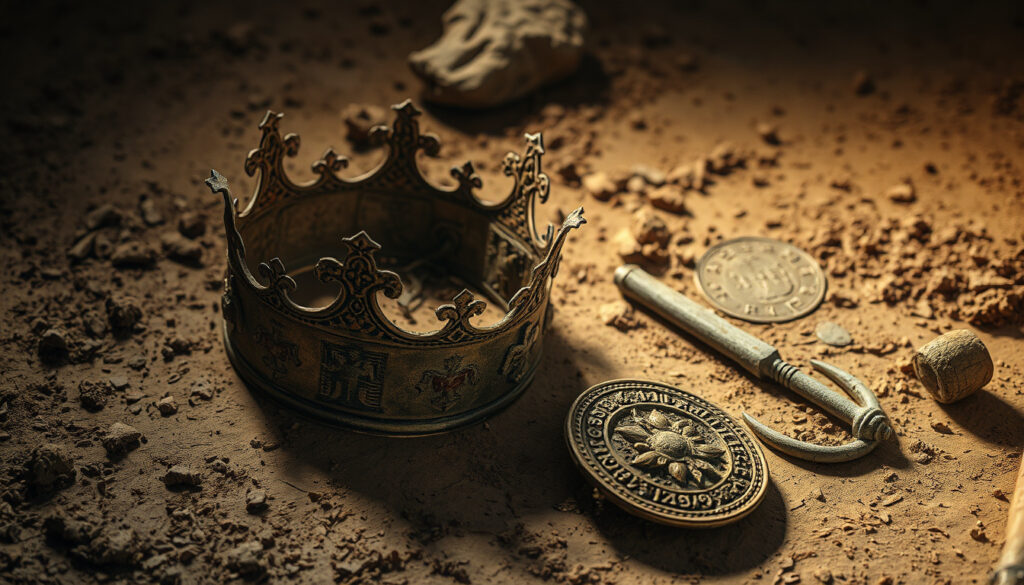
Richard III: Controversy, Modern Discovery, and Legacy
Few English kings have been reduced to a caricature quite like Richard III. Between Shakespeare’s hunchbacked villain and the mystery of the Princes in the Tower, his reputation has been shaped more by propaganda than by facts. But modern archaeology and DNA science have rewritten the story — starting with a skeleton found under a Leicester car park in 2012. This article separates the Tudor myth from the forensic evidence, so you can judge the real Richard III for yourself.
Reign: 1483–1485 ·
Died: 22 August 1485 (age 32) ·
Burial discovered: 2012 under a Leicester car park ·
DNA confirmation: 2014 via mitochondrial DNA
Quick snapshot
- Last Plantagenet and Yorkist king (BBC News)
- Reigned 1483–1485 (BBC News)
- Died at Battle of Bosworth (The Telegraph)
- Skeleton found under a Leicester car park in August 2012 (BBC News)
- Identified through DNA, scoliosis, and battle wounds (University of Cambridge (forensic study))
- Reburied in Leicester Cathedral in March 2015 (BBC News)
- Usurpation of throne from Edward V (BBC News (2025 retrospective))
- Princes in the Tower mystery (BBC News (2025 retrospective))
- Tudor propaganda vs. modern reevaluation (The Telegraph)
- Portrayed as a murderous villain (BBC News (2025 retrospective))
- Play Richard III written around 1592 (BBC News (2025 retrospective))
- Influences public perception to this day (The Telegraph)
Five key facts, one pattern: Richard III’s life was short, his reign shorter, and his modern rediscovery turned history upside down.
| Attribute | Value |
|---|---|
| Full name | Richard Plantagenet |
| Born | 2 October 1452 |
| Died | 22 August 1485 |
| Reign | 1483–1485 |
| Burial | Leicester Cathedral (reinterred 2015) |
Why was Richard III controversial?
Richard III’s reign lasted just over two years, but the controversy around it has persisted for more than five centuries. The core of the dispute lies in how he became king and the fate of his two young nephews, the Princes in the Tower.
Was Richard III a good king?
Historical records from his brief reign suggest Richard III introduced legal reforms — including the establishment of the Court of Requests to provide poor men access to justice — and was seen as a capable administrator in the north of England (BBC News (archaeological context)). Yet his seizure of the throne from his 12-year-old nephew Edward V in June 1483 cast a shadow over any administrative achievements. The 2025 BBC retrospective noted that modern historians remain divided: some see a pragmatic ruler, others a ruthless usurper.
What was King Richard III famous for?
He is most famous for two things: the disappearance of the Princes in the Tower and his defeat at the Battle of Bosworth, which ended the Plantagenet dynasty. Shakespeare’s play, written around 1592, cemented his image as a “poisonous bunch-backed toad,” a caricature that the Tudor dynasty actively promoted (The Telegraph (Tudor propaganda analysis)).
How did they know that Richard III was buried in a car park?
The discovery of Richard III’s remains under a Leicester car park in August 2012 was the result of a targeted archaeological search led by the University of Leicester. The team used historical records pointing to the lost Greyfriars church as his burial site.
What evidence confirmed the skeleton was Richard III?
- Scoliosis: The skeleton showed a pronounced curvature of the spine, consistent with contemporary descriptions of a “crooked back” (The Telegraph (skeletal analysis)).
- Battle wounds: Experts identified 10 battle-related injuries, including two fatal blows to the skull (The Telegraph (injury documentation)).
- Radiocarbon dating: Bones were carbon dated to a period from 1455 to 1540 (BBC News (carbon dating)).
How was Richard III identified through DNA?
Mitochondrial DNA extracted from the skeleton was compared to living descendants through the female line. In 2013, researchers at the University of Leicester announced a match with Michael Ibsen, a Canadian-born furniture maker whose mitochondrial DNA matched the skeleton’s (BBC News (DNA match)). The University of Cambridge later called it “probably the oldest forensic case solved to date,” with a 99.999% confidence level (University of Cambridge (forensic case study)).
The DNA identification set a precedent for solving centuries-old historical mysteries with modern genetics. It proved that even the bones of a king lost for 500 years could be identified beyond reasonable doubt.
Are there any living descendants of Richard III?
Yes, several living relatives have been identified through genealogical research. The most direct is Michael Ibsen, who was traced through 17 generations of female-line descent from Anne of York, Richard III’s sister. Benedict Cumberbatch, the actor who played Richard III in the BBC series The Hollow Crown, is also a distant relative — they share a common ancestor in Edward III (BBC News (2025 retrospective)).
Who are the known living relatives of Richard III?
Beyond Ibsen and Cumberbatch, genealogists have identified dozens of individuals who descend from the Plantagenet family tree. The DNA mapping project launched in 2014 aimed to create an archive of Richard III’s genetic profile for future research (BBC News (DNA mapping project)).
Is Benedict Cumberbatch related to Richard III?
Yes. Cumberbatch is a descendant of Edward III, making him a 16th cousin twice removed of Richard III. He even participated in the reburial ceremony at Leicester Cathedral in March 2015, reading a poem (BBC News (reburial ceremony)).
How was Richard III killed?
Richard III died on 22 August 1485 at the Battle of Bosworth Field, the final major battle of the Wars of the Roses. Eyewitness accounts and skeletal evidence paint a vivid picture of his final moments.
Where did Richard III die?
He fell in combat at Bosworth Field in Leicestershire. Contemporary chronicles say he charged directly at Henry Tudor’s bodyguard, fighting fiercely until overwhelmed (The Telegraph (battle account)).
What injuries did Richard III sustain at Bosworth?
The skeleton bore 10 battle-related injuries, including two that were likely fatal: a penetrating wound to the back of the skull from a bladed weapon and a stabbing injury to the pelvis. Nine of the injuries involve the skull, suggesting he lost his helmet at some point (The Telegraph (injury analysis)). His crown was reportedly recovered from a hawthorn bush after his death.
“Now is the winter of our discontent / Made glorious summer by this sun of York.”
— William Shakespeare, Richard III (c. 1592)
Shakespeare’s lines, written a century after Bosworth, forged the public image of Richard as a villain. The skeleton shows a man who fought to the death — not a cowardly tyrant but a warrior-king who died leading his men.
Why don’t they DNA test the princes in the tower?
The fate of Edward V and his brother Richard of Shrewsbury, who disappeared in 1483, remains one of England’s greatest mysteries. Bones discovered in the Tower of London in 1674 are believed by some to be theirs, but no DNA test has been permitted.
What happened to the Princes in the Tower?
After Richard III took the throne, the two boys were lodged in the Tower of London (then a royal residence). They were last seen publicly in the summer of 1483. The official account — later promoted by the Tudors — is that Richard ordered their murder to secure his position. No contemporary source names the killer, and the bodies were never definitively identified (BBC News (2025 retrospective)).
Why haven’t the remains been tested?
The bones housed in Westminster Abbey were examined in 1933, but the Church of England has consistently refused requests for DNA testing. In part, this stems from the lack of surviving close maternal-line relatives to provide a genetic reference — unlike Richard III, who had a clear mitochondrial DNA link to Michael Ibsen (University of Cambridge (forensic limitations)). Without a reliable comparative sample, even a DNA test might not settle the mystery.
Richard III’s identification succeeded because a direct maternal descendant with matching mitochondrial DNA existed. For the Princes, no such living relative has been found, and the Church of England sees testing as unnecessary disturbance of a shrine.
Timeline of key events
- 2 October 1452: Richard III born
- 9 April 1483: Edward IV dies; Edward V becomes king
- 26 June 1483: Richard seizes throne as Richard III
- 1483: Princes in the Tower disappear
- 22 August 1485: Battle of Bosworth; Richard III killed
- c. 1592: Shakespeare’s play Richard III first performed
- August 2012: Excavation under Leicester car park discovers skeleton
- February 2013: DNA analysis confirms identity as Richard III
- March 2015: Reburial in Leicester Cathedral
- 2024–2025: Glass above grave repaired after damage; ongoing preservation (BBC News (grave glass repairs))
Confirmed facts and uncertainties
Confirmed facts
- Richard III was killed at Bosworth
- His skeleton was found under a car park in Leicester (BBC News)
- His identity confirmed by DNA and skeletal analysis (University of Cambridge)
- He had scoliosis (The Telegraph)
- 10 battle injuries on skeleton (The Telegraph)
What’s unclear
- Fate of the Princes in the Tower (BBC News (2025))
- Whether Richard III ordered their murder (BBC News (2025))
- Exact nature of his relationship with Anne Neville
- Whether the bones in Westminster Abbey are the princes’
The quotes that shaped his image
“Now is the winter of our discontent / Made glorious summer by this sun of York.”
— William Shakespeare, Richard III (c. 1592)
“Beyond reasonable doubt it’s Richard.”
— Lead archaeologist Richard Buckley, University of Leicester (BBC News, 2013)
The first quote immortalised Richard as a villain; the second, made by the man who found his bones, closed the case on his identity.
Consequence and decision
For historians and the public, the Richard III story is a reminder that written history is often shaped by the victors. Modern science has given us facts — the curve of his spine, the wounds of his death, the exact place of his rest — but it cannot tell us whether he ordered the deaths of his nephews. For readers of English history, the choice is clear: accept the Tudor narrative with a grain of salt, or wait for a future test of those Westminster bones that may never come.
bbc.com, bbc.com, bbc.co.uk, bbc.com, news.sky.com, bbc.com, bbc.com, youtube.com
Frequently asked questions
What was Richard III’s physical appearance?
He had a curved spine (scoliosis), not a full hunchback. He was of slight build, around 5 feet 8 inches tall, with a slender physique (The Telegraph).
Did Richard III really kill the princes?
No direct evidence exists. The charges were promoted by Tudor historians. Modern scholars consider the case unproven (BBC News (2025)).
Why is Richard III often portrayed as a villain?
Shakespeare’s play, written under Tudor patronage, exaggerated his deformities and crimes to justify the Tudor claim. The portrayal persisted for centuries (The Telegraph).
How did Richard III become king?
After Edward IV died in April 1483, Richard was named Lord Protector for the young Edward V. He declared Edward IV’s marriage invalid, making the princes illegitimate, and took the throne on 26 June 1483 (BBC News).
What was the Battle of Bosworth?
The final battle of the Wars of the Roses, fought on 22 August 1485. Richard III’s army was defeated by Henry Tudor, who became Henry VII. Richard was killed on the field (The Telegraph).
Where is Richard III buried now?
In Leicester Cathedral, after a reburial ceremony in March 2015. His grave is covered with a glass slab that was repaired in 2024 after damage (BBC News (grave glass)).
Is the Richard III play historically accurate?
No. Shakespeare took dramatic liberties. Richard’s physical condition was exaggerated, and many events were invented to fit Tudor propaganda. The play is a masterpiece of fiction, not history (BBC News (2025)).
More related posts
 Anna Karina: Biography, Films, and Legacy
 Jamie Oliver: Net Worth, Children, and Downfall
 Idi Amin: Facts, Biography, and Brutal Dictatorship
 Tik Tok Coins – How to Buy, Prices, Uses and Safety
 Fountain Valley Medical Centre – Contact, Doctors, Bulk Billing & Hours
 Origin Contact Number: Energy Phone & Support Australia
 Melbourne Comedy Festival 2025 – Dates, Lineup, Tickets Guide
 Jaafar Jackson: Michael Jackson’s Nephew, Net Worth, Biopic