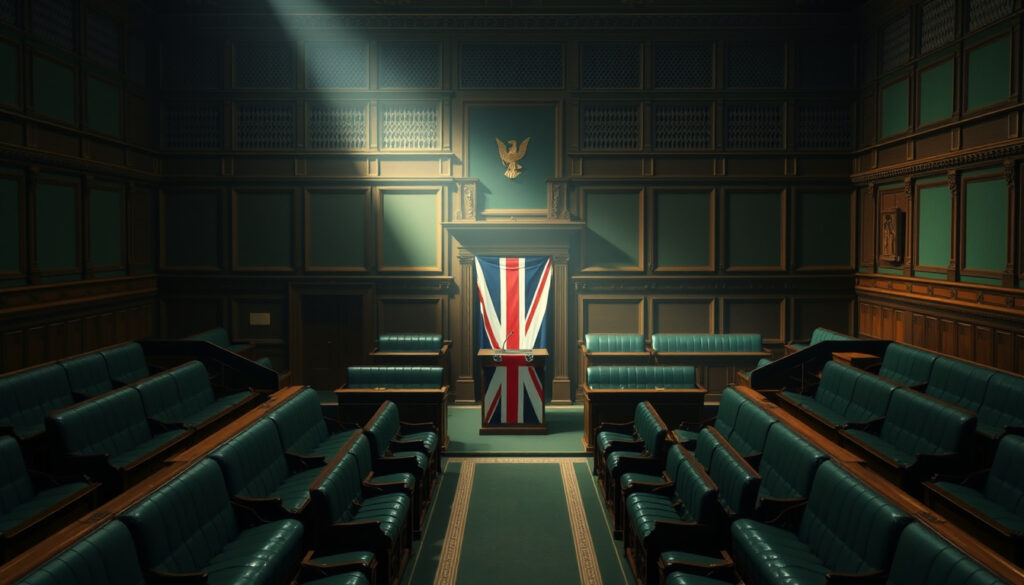
Margaret Thatcher: Controversy, Downfall, and Legacy Explained
Most people have a strong opinion about Margaret Thatcher, even if they weren’t alive when she was in power. That’s because her decade as Britain’s first female prime minister wasn’t just a political tenure—it was a transformation that reshaped the country’s economy, society, and the Conservative Party itself. The key decisions, controversies, and personal milestones that defined the Iron Lady, from her rise to power to her fall and the legacy that still sparks debate, are covered here.
Prime Minister of the United Kingdom: 1979–1990 ·
Political party: Conservative ·
Nickname: The Iron Lady ·
Born: 13 October 1925, Grantham, England ·
Died: 8 April 2013, London, England ·
First female UK Prime Minister: Yes
Quick snapshot
- Thatcher served as UK Prime Minister from 1979 to 1990 (Britannica)
- She was the first female British Prime Minister and Europe’s first woman prime minister (Britannica) (Britannica)
- She died on 8 April 2013 from a stroke (POLITICO / AP timeline)
- The exact nature of the personal relationship between Thatcher and Queen Elizabeth II is not fully public due to confidentiality
- Some estimates of the cost of her funeral vary; the exact total is not officially disclosed
- The long-term economic impact of her privatization policies remains debated among economists
- The extent of Thatcher’s personal influence on her successor John Major’s policies is debated among historians
- The precise number of job losses resulting from the closure of coal mines during the miners’ strike is not officially compiled
- 1925: Born in Grantham
- 1979: Became Prime Minister
- 1990: Resigned as Prime Minister
- 2013: Died from a stroke
- Ongoing historical reassessment of Thatcher’s economic legacy
- Debate within the Conservative Party over her ideological influence
- Continued scholarly analysis of the social impact of her policies
Eight key facts about Margaret Thatcher, one pattern: a life that moved from a grocer’s daughter in Grantham to the highest office in the land, with each stage marked by deliberate, often divisive choices.
| Attribute | Value |
|---|---|
| Full name | Margaret Hilda Thatcher (née Roberts) |
| Born | 13 October 1925, Grantham, Lincolnshire, England |
| Died | 8 April 2013, London, England |
| Political party | Conservative |
| Spouse | Denis Thatcher (m. 1951; died 2003) |
| Children | Mark Thatcher, Carol Thatcher |
| Alma mater | Somerville College, Oxford |
| Occupation | Barrister, chemist, politician |
What is Margaret Thatcher best known for?
First female Prime Minister of the United Kingdom
Thatcher became the first woman to lead a major Western democracy when she took office on 4 May 1979. According to Britannica (the authoritative encyclopedia), she was also Europe’s first woman prime minister. Her election victory that year gave the Conservatives a 43-seat majority, and she went on to win three consecutive general elections.
Thatcherism: privatization and deregulation
Her policies, collectively known as Thatcherism, emphasized privatization of state-owned industries, deregulation of financial markets, and a reduction in the power of trade unions. Supporters credit her with transforming Britain’s economy away from statism toward liberalism, as noted by Britannica. Critics, however, argue that these policies increased inequality and social division (Better Capitalism, a policy analysis site).
Victory in the Falklands War
In 1982, Argentina invaded the Falkland Islands, a British overseas territory. Thatcher ordered a naval task force to retake the islands, and after a 10-week conflict, Britain achieved victory. The Falklands War was a turning point in her premiership, boosting her popularity and reinforcing her image as a strong leader.
Longest-serving British PM of the 20th century
Thatcher served as prime minister for 11 years and 209 days, the longest continuous tenure since Lord Salisbury in the 19th century. The Churchill Archives Centre (the official repository of Thatcher’s papers) confirms she held the office consecutively for eleven and a half years.
Thatcher’s triple legacy—first female PM, architect of Thatcherism, and Falklands victor—secured her place in history, but each achievement also sowed the seeds of the controversies that would follow.
The implication: each achievement carried the seeds of future controversy.
What did Margaret Thatcher do that was controversial?
The poll tax (Community Charge)
The Community Charge, commonly called the poll tax, was introduced in 1989 as a replacement for local government rates. It levied a flat per-adult charge regardless of income, leading to widespread protests and civil disobedience. According to Britannica, the poll tax was a major factor in her downfall.
The miners’ strike of 1984–85
Thatcher’s government confronted the National Union of Mineworkers when the union opposed plans to close 20 coal mines. The strike lasted a year and involved violent clashes between picketers and police. The government’s strategy of stockpiling coal and using non-union haulage eventually broke the strike, leading to the closure of dozens of mines. The BBC (UK public service broadcaster) notes that the defeat of the miners marked a turning point in the decline of trade union power.
Privatization of public utilities
Thatcher’s government privatized major state-owned enterprises, including British Telecom, British Gas, British Airways, and British Steel. The policy was intended to increase efficiency through competition, but critics argued it led to higher prices for consumers and a loss of public control over essential services. A 40-year reassessment in the Cambridge Journal of Economics (academic peer-reviewed journal) states that Thatcher’s policies changed the economic and social outlook of the UK.
Section 28 and social policies
In 1988, the government enacted Section 28 of the Local Government Act, which prohibited local authorities from “promoting” homosexuality. The law was widely condemned by LGBT rights groups and remained in force until 2003 in England and Wales. The Guardian (UK news publication) reports that the measure was seen as part of a broader conservative social agenda.
Thatcher’s economic reforms made Britain more competitive, but her social policies and handling of the miners’ strike deepened the country’s regional and class divides—a trade-off that still defines the debate around her legacy.
Pattern: each reform had a dual effect—economic gain for some, social cost for others.
What caused the downfall of Margaret Thatcher?
The poll tax rebellion
Opposition to the poll tax within the Conservative Party and the public eroded Thatcher’s authority. In March 1990, a demonstration in London turned into a riot, and many Conservative MPs feared the tax would cost them their seats. The BBC notes that the poll tax became a symbol of her detachment from ordinary voters.
Divisions over Europe
Thatcher’s scepticism toward European integration alienated key party members. In a 1988 speech in Bruges, she declared that Britain did not want to be “submerged in a European super-state.” Her stance put her at odds with pro-European figures like Geoffrey Howe and Michael Heseltine.
Loss of party support
By 1990, Thatcher’s leadership style and policy positions had driven a wedge within the Conservative Party. Geoffrey Howe, her former deputy prime minister, resigned in November 1990 and delivered a devastating resignation speech in the House of Commons, which many historians regard as the trigger for the leadership challenge. According to the Guardian, Howe’s speech was a turning point.
Leadership challenge and resignation
Michael Heseltine challenged Thatcher for the party leadership on 20 November 1990. She won the first ballot with 204 votes to Heseltine’s 152, but fell four votes short of the required majority under party rules. After initially indicating she would contest a second round, she withdrew and resigned as prime minister on 28 November 1990. Britannica confirms she resigned as Conservative leader and prime minister on 22 November 1990, with John Major succeeding her on 28 November.
The pattern: a leader’s strengths can become her weaknesses when misaligned with party and public sentiment.
Did Queen Elizabeth and Margaret Thatcher get along?
Formal but respectful relationship
Their relationship was correct and formal, with both maintaining strict protocols. The Queen’s role as a constitutional monarch required political neutrality, while Thatcher, as prime minister, was bound by the conventions of weekly audiences. According to the BBC, the relationship was never overtly hostile but was often described as “distant.”
Reported tensions over policy
Reports suggest the Queen had concerns about Thatcher’s social policies, particularly the poll tax and rising unemployment. The Guardian reported that unnamed palace sources indicated the Queen was “worried” about the divisiveness of Thatcher’s policies. However, no official confirmation of tension exists due to the confidentiality of the monarch–prime minister meetings.
Private meetings and public perception
Thatcher’s memoirs describe the Queen as “very well informed” and their audiences as “always enjoyable.” This is cited in the BBC’s coverage of the relationship. Public perception of a rift was fueled by press reports, but both women remained publicly respectful.
The real story of their relationship may never be fully told, but the contrast between personal warmth in Thatcher’s memoirs and the reported tension in palace circles shows how much of the story remains hidden.
What this means: the truth likely lies somewhere between the public accounts, and the confidentiality of the meetings ensures the full picture remains elusive.
What was Margaret Thatcher suffering from?
Dementia diagnosis in later life
In 2008, her daughter Carol Thatcher revealed that her mother had been diagnosed with dementia. The BBC reported that Carol said her mother had been showing signs of memory loss for several years. The diagnosis was made public in a biography written by Carol.
Health during her premiership
Thatcher suffered a series of strokes in 2002 and 2012. The first stroke, in 2002, was minor, but a second in 2012 left her unable to speak in public. According to the POLITICO / AP timeline, she had been in declining health for several years.
Cause of death
She died on 8 April 2013 from a stroke at the age of 87. Her death was confirmed by her family and announced by the government. The BBC reported that she died peacefully at the Ritz Hotel in London, where she had been staying after leaving her home.
The catch: the Iron Lady’s later fragility humanised her but also underscored the gap between public persona and private reality.
Who paid for Thatcher’s funeral?
State funeral with military honours
Thatcher received a state funeral with military honours, though not a full state funeral (which is reserved for monarchs and a few exceptional figures). The ceremony took place at St Paul’s Cathedral on 17 April 2013, with full military honours including a procession through London.
Funding from the UK government
The cost was covered by the UK government, estimated at several million pounds. The BBC reported that the government allocated £3.6 million for the funeral, though the exact total was not officially disclosed. The Guardian noted that the cost included security, police overtime, and ceremonial expenses.
Contributions and controversies
Some public funding was criticized by opponents of her policies. The Daily Mail (UK tabloid) reported that the government’s decision to use public funds for the funeral sparked protests, with some arguing that the money could have been spent on public services. Nevertheless, the government defended the cost as appropriate for a former prime minister.
The funeral cost controversy highlighted the enduring polarisation around Thatcher: many Britons saw a state-funded ceremony as a fitting tribute to a historic leader, while others viewed it as an insult to the communities that had suffered under her policies.
The pattern: even in death, Thatcher’s legacy provoked division, mirroring the rifts she created in life.
Timeline
Eleven milestones, one pattern: Thatcher’s life was a series of rapid ascents followed by a painful decline, bookended by the Conservative Party’s embrace and eventual rejection of her. A selection of key dates:
- 1925 – Born in Grantham, Lincolnshire (Britannica)
- 1947 – Graduated from Oxford University with a chemistry degree (Churchill Archives Centre)
- 1959 – Elected MP for Finchley (POLITICO / AP timeline)
- 1975 – Elected leader of the Conservative Party (POLITICO / AP timeline)
- 1979 – Became Prime Minister after election victory (Churchill Archives Centre)
- 1982 – Falklands War (Britannica)
- 1984 – Miners’ strike began (BBC)
- 1989 – Introduction of the Community Charge (poll tax) (Britannica)
- 1990 – Resigned as Prime Minister (Britannica)
- 2002 – Suffered a stroke (POLITICO / AP timeline)
- 2013 – Died from a stroke; state funeral (BBC)
What we know and what remains unclear
Confirmed facts
- Thatcher served as Prime Minister of the United Kingdom from 1979 to 1990 (Britannica)
- She was the first female British Prime Minister (Britannica)
- She died on 8 April 2013 from a stroke (POLITICO / AP timeline)
- Her funeral was a state funeral with military honours funded by the government (BBC)
- She was diagnosed with dementia in 2008 (BBC)
What’s unclear
- The exact nature of the personal relationship between Thatcher and Queen Elizabeth II is not fully public due to confidentiality
- Some estimates of the cost of her funeral vary; the exact total is not officially disclosed
- The long-term economic impact of her privatization policies remains debated among economists
- The extent of Thatcher’s personal influence on her successor John Major’s policies is debated among historians
- The precise number of job losses resulting from the closure of coal mines during the miners’ strike is not officially compiled
Perspectives from those who knew her
“The Queen is very well informed. I always enjoyed my audiences with her.”
Margaret Thatcher, in her memoirs, as cited by BBC
“She had been showing signs of memory loss for several years. It was heartbreaking to see such a brilliant mind fade.”
Carol Thatcher, her daughter, in a 2008 interview, as reported by BBC
“It’s rather like sending your opening batsmen to the crease only for them to find that their bats have been broken by the team captain.”
Geoffrey Howe, in his resignation speech, 13 November 1990, as reported by the Guardian
The pattern: those closest to Thatcher—her daughter, her colleagues, and even the monarch—saw a woman who was both formidable and fragile, admired and resented, in equal measure.
Summary
Margaret Thatcher’s premiership was a decade of radical change that left Britain wealthier in some ways but more divided in others. Her policies on privatization, trade unions, and the poll tax reshaped the country’s political landscape, while her personal health struggles and strained relationship with the monarchy added a human dimension to the Iron Lady myth. For the Conservative Party today, the choice is clear: embrace her legacy of bold reform and risk alienating the centre, or pivot to a more moderate stance and risk losing the base that still reveres her.
en.wikiquote.org, youtube.com, en.wikipedia.org, goodreads.com, youtube.com, imdb.com, institutodelibertadeconomica.org
Many analysts still debate the long-term effects of Thatchers transformative policies and controversies, particularly her approach to privatization and union reform.
Frequently asked questions
What was Margaret Thatcher’s early life like?
She was born on 13 October 1925 in Grantham, Lincolnshire, to a grocer father and a mother who was a homemaker. She studied chemistry at Oxford University and later became a barrister.
How did Margaret Thatcher become Conservative leader?
She was elected leader of the Conservative Party on 11 February 1975, defeating Edward Heath. Her rise was seen as a shift to the right within the party.
What was the Falklands War and why was it important?
The Falklands War was a 10-week conflict in 1982 between Argentina and the United Kingdom over the Falkland Islands. Britain’s victory bolstered Thatcher’s popularity and her image as a strong leader.
What is Thatcherism?
Thatcherism refers to the political and economic policies of Margaret Thatcher, emphasizing privatization, deregulation, lower public spending, and a reduction in trade union power.
Why is Thatcher called the Iron Lady?
The nickname “Iron Lady” was coined by a Soviet journalist in 1976, referring to her steadfast opposition to communism. Thatcher embraced it as a symbol of her resolve.
What happened to the poll tax?
The Community Charge, or poll tax, was introduced in 1989 and led to widespread protests. It was replaced by the Council Tax in 1993 by John Major’s government.
How did Margaret Thatcher change the British economy?
She privatized state-owned industries, deregulated financial markets, and reduced the power of trade unions. The long-term impact remains debated, with supporters citing growth and critics pointing to increased inequality.
What did Margaret Thatcher do after leaving office?
She was given a life peerage in 1992 as Baroness Thatcher of Kesteven. She wrote her memoirs, made speaking tours, and remained politically active until her health declined. She died in 2013.
Related reading: Robert Menzies: Complete Guide to Australia’s Longest-Serving PM · Jamie Dimon Biography: Net Worth, Politics & Health
More related posts
 No Time to Die – Plot Summary, Ending and Cast Guide
 Tea Tree Oil: Uses, Benefits, Side Effects, Safety
 Unsolved Case Files – Cold Case Board Game Guide
 Maybe I Do: Where to Watch, Cast & Relationship Facts
 Rob Lowe’s Bell’s Palsy, Ageless Looks, Family & Career
 Lesley Manville: Career, Personal Life, Net Worth & Key Roles
 Thelma Riley: Ozzy Osbourne’s First Wife – Life, Children, Now
 Taylor Swift Facts & Rumors: What’s Verified