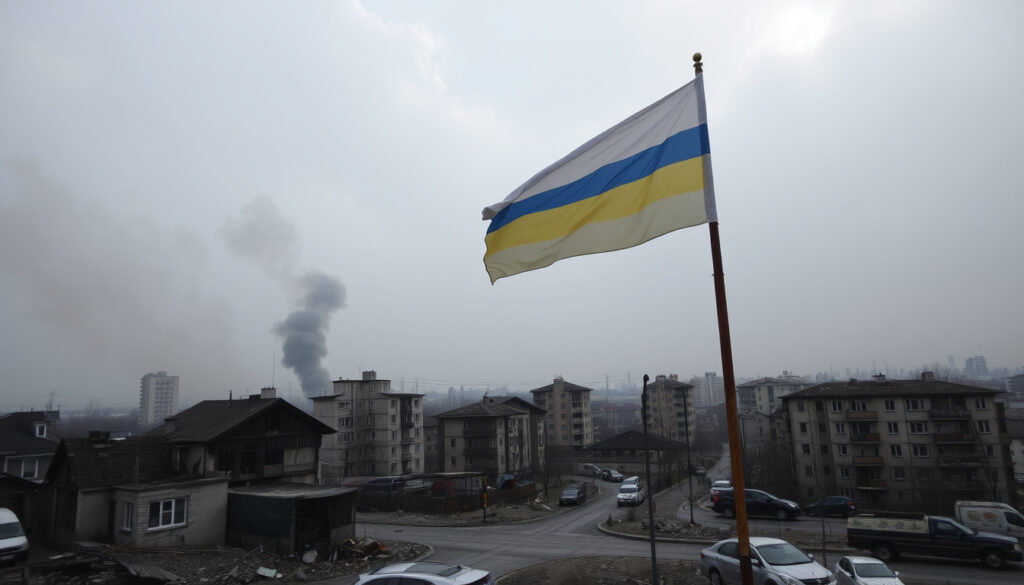
Ukraine War Latest News: Zelensky Proposes Ceasefire Amid Strikes
Russian bombardment entered a third consecutive day of intensified strikes on May 4, 2026, killing at least 10 people across Ukraine as President Volodymyr Zelensky simultaneously proposed an open-ended ceasefire beginning midnight May 6. That offer—and Moscow’s response—now shapes every calculation on the battlefield and at the negotiating table.
Russian strikes reported: 10 killed · Ukraine hits: Russian oil tankers and terminal · Donetsk attacks: At least 19 · Ceasefire proposal: Zelensky open-ended from May 6 · Fatalities today: At least 3 confirmed
Quick snapshot
- Russian strikes killed at least 10 people across Ukraine in 24 hours (The Independent)
- 3 killed in Donetsk Oblast as attacks intensified (The Kyiv Independent)
- Zelensky proposed open-ended ceasefire from midnight May 6, 2026 (The Independent)
- Whether Russia will accept the May 6 ceasefire terms
- Total casualty count from Russia’s current strike wave
- Extent of damage to targeted Russian military facilities
- Russia requested two-day Victory Day ceasefire; Kyiv countered with open-ended offer
- Ukrainian drones struck Moscow for third consecutive night
- Ukraine targeted Russian oil infrastructure in latest attacks
- Russia’s response to Zelensky’s open-ended ceasefire proposal
- Whether the battlefield tempo shifts around Victory Day
- Continued Ukrainian strikes on Russian energy infrastructure
The table below summarizes key facts from recent reporting across multiple sources.
| Key Fact | Detail |
|---|---|
| Start date | February 24, 2022 |
| Recent fatalities | 10+ reported today |
| Key targets | Oil refineries, shadow fleet |
| Ceasefire talks | Proposed May 6 |
Who is winning the war in Ukraine?
Neither side has achieved a decisive breakthrough that major outlets would call victory. Russian forces maintain a grinding presence in the east, where they have tried repeatedly to establish footholds around Donetsk, but Ukraine’s eastern fortress belt continues to hold. The Kharkiv Oblast town of Merefa bore the brunt of one such assault on May 4, when missiles killed at least four people and injured 18. “The fighting remains locked in a grinding exchange,” according to analysts tracking the frontlines.
Current frontline status
The frontline has shown remarkable stability over recent weeks, despite intense bombardments. Ukrainian forces have successfully defended key population centers, though Russian artillery and glide-bomb campaigns continue to exact a toll on infrastructure and civilians alike. The Donetsk region saw at least 19 separate attacks reported in a 24-hour period, according to Ukrainian military briefings.
Recent territorial gains
Neither side has claimed significant territorial advances in the current offensive cycle. Russian units have focused on incremental pushes in the Pokrovsk and Kurakhove directions, while Ukrainian brigades have consolidated defensive positions. The lack of dramatic gains contrasts sharply with the pace of strikes on civilian infrastructure.
Casualty assessments
Official casualty figures remain contested. Ukrainian authorities reported at least 10 killed and over 100 injured across the country in a single 24-hour period. Russia’s Defense Ministry has not released independent casualty assessments, while Ukrainian military statements describe ongoing resistance rather than battlefield losses.
Russia-Ukraine war latest news today
The diplomatic chess match intensified Thursday as Ukrainian President Volodymyr Zelensky publicly laid out ceasefire terms that go far beyond what Moscow had proposed. Where Russia requested a limited two-day pause for its Victory Day parade, Kyiv answered with an open-ended offer: a complete cessation of hostilities beginning at midnight on May 6, 2026, provided Russia reciprocates. The proposal represents a significant escalation of Kyiv’s diplomatic posture.
Key events from today
Ukraine’s General Staff confirmed that Ukrainian drones struck the Yaroslavl oil refinery in a mass attack inside Russia overnight. The strike marks one of the deepest incursions into Russian territory in recent months. Meanwhile, Russian forces launched another wave of strikes against Ukrainian energy infrastructure, with Ukraine’s gas utility reporting five killed and 37 injured in overnight attacks on oil and gas facilities. The parallel escalation underscores how both sides are simultaneously pursuing talks and intensifying operations.
International reactions
Western partners have been closely monitoring the ceasefire proposals. The United States recently waived certain sanctions on Moscow’s oil sector, a move that drew scrutiny from Ukrainian officials. The sanctions waiver, which affects specific transactions tied to Russian energy exports, comes as the war enters its fifth year and as aid packages face renewed debate in Washington.
Ceasefire talks
Russia has not formally responded to Zelensky’s May 6 proposal as of publication time. The Kremlin’s initial request for a two-day Victory Day ceasefire has been widely interpreted as a public relations gesture ahead of Moscow’s May 9 celebrations. Ukrainian officials have rejected the narrow framing, with Zelensky arguing that any meaningful pause must be unconditional and open-ended.
The pattern reveals a fundamental truth about this war’s dynamics—ceasefire offers serve as tactical instruments, not genuine peace gestures.
Kyiv has shifted the narrative: by proposing unconditional terms, Ukraine puts Russia in the position of either accepting peace or explaining why it won’t stop fighting. That calculus matters when Victory Day crowds are watching.
What leaders are saying
Ukraine proposes a ceasefire beginning at midnight on May 6, 2026. This is an unconditional offer—it requires only that Russia reciprocate. We are ready to stop fighting if they are.
— Volodymyr Zelensky, President of Ukraine (The Kyiv Independent)
Russia requested a two-day ceasefire for Victory Day celebrations. Our response demonstrates that any pause must serve peace, not propaganda. Kyiv will not accept a temporary halt that Moscow can exploit.
— Ukrainian Foreign Ministry spokesperson (The Independent)
The two-day ceasefire request for Victory Day reflects Russia’s interest in a symbolic pause, not a sustainable peace framework.
— Kremlin spokesperson Dmitry Peskov, via state media
Ukraine breaking news today
Civilian casualties mounted as Russia’s strike campaign widened across multiple regions. At least 10 people were killed and more than 76 injured in attacks spanning Kherson, Odesa, Donetsk, Zaporizhzhia, and Sumy oblasts within 24 hours. The attacks struck residential areas and infrastructure, drawing condemnation from international monitors.
Civilian impacts
The human cost of the strikes continues to accumulate. In Kherson Oblast, authorities reported casualties from artillery fire targeting a riverside community. Odesa saw damage to port infrastructure, though officials said no shipping disruptions had occurred. Sumy, a border region that has endured repeated Russian strikes, recorded additional casualties from overnight attacks.
Military exchanges
Along the contact line, exchanges of fire remained heavy. Russian forces launched 833 separate attacks reported across Ukrainian positions in a single day, according to military briefings. Ukraine responded with its own strikes, including the targeting of Russian military-industrial sites deep inside Russia.
Infrastructure hits
Ukraine’s energy infrastructure remains a primary target. Russia’s overnight bombardment hit facilities operated by Ukraine’s state gas utility, killing five workers and injuring 37. The strikes follow a pattern of targeting energy assets that analysts say aims to degrade civilian morale and strain the grid heading into summer.
Russia’s infrastructure campaign forces Ukraine to divert air defense assets from the frontline to protect cities. Each successful strike on civilian infrastructure creates an unwinnable dilemma in real time.
Ukraine military news today
Ukraine’s long-range strike capability has taken on renewed urgency as the war’s dynamics shift. Ukrainian forces launched coordinated missile and drone attacks on multiple Russian regions overnight, reportedly striking a critical military-industrial site in Cheboksary in the Chuvash Republic. The strike, confirmed through Telegram media channels close to Russia’s Defense Ministry, targeted facilities involved in producing military equipment.
Ukrainian operations
Ukraine’s General Staff confirmed that drones struck Russia’s Yaroslavl oil refinery as part of a broader campaign against energy infrastructure. The refinery is among the largest in western Russia and has become a repeated target. Ukrainian drones also struck targets near Moscow for a third consecutive night, prompting Zelensky to publicly note that scaled-back Victory Day celebrations suggest growing Russian vulnerability.
Russian advances
Russian forces continued pressure along the eastern frontline, with the most intense fighting reported around Kurakhove and Pokrovsk. Moscow’s forces have concentrated assault groups in these sectors, seeking incremental gains that could eventually threaten supply routes. The eastern fortress belt—Ukrainian defensive positions reinforced over years of fighting—has so far held against the pressure.
Weaponry updates
Russia’s Defense Ministry claimed that 203 Ukrainian drones were intercepted across multiple regions, including areas near Moscow, occupied Crimea, and the Black Sea, during the large-scale overnight attack. Ukraine has significantly expanded its domestic drone production, with officials claiming output has reached tens of thousands of units per month. Western partners have supplied additional air defense interceptors, though Ukrainian commanders say the gap remains significant.
Ukraine’s drone strikes deep into Russia generate headlines, but they have not yet forced Moscow to reduce frontline pressure. Until strikes demonstrably degrade Russia’s ability to sustain combat operations, the battlefield balance remains largely unchanged.
Russian Ukraine latest news today
Moscow’s response to the ceasefire proposal remained under wraps as Victory Day preparations continued. Russian authorities in Tuapse, a Black Sea port that has been attacked four times in 16 days, announced an official list of more than 186 bomb shelters for civilians for the first time—a sign that Ukraine’s strikes are generating pressure on civil defense planning even without direct battlefield effects.
Moscow’s statements
The Kremlin’s public messaging has focused on the upcoming Victory Day parade, emphasizing military strength and historical narratives. President Vladimir Putin has not directly addressed Zelensky’s ceasefire proposal in public statements, though Russian officials have indicated the two-day request remains on the table. State media has highlighted civilian casualty claims from Ukrainian strikes, framing Kyiv as the aggressor.
Kremlin military moves
Russian forces have concentrated additional units in Belgorod Oblast, according to Western defense assessments. The buildup suggests Moscow may be preparing to expand operations in the border region, potentially as a pressure tactic ahead of any ceasefire negotiations. Russia’s Defense Ministry reported one civilian killed and four injured in Sevastopol after Ukrainian drones hit the city, with 17 homes and civilian infrastructure damaged.
Sanctions context
The Biden administration’s decision to waive certain sanctions on Russian oil transactions came under renewed scrutiny as fighting intensified. The waivers, which allow specific energy-related transactions that had been restricted, drew criticism from Ukrainian officials who argued the measures undermine economic pressure on Moscow. Supporters of the waivers say they are targeted exemptions designed to avoid market disruption while maintaining overall sanctions pressure.
Timeline of today’s developments
What is confirmed
- Russian strikes killed at least 10 across Ukraine (The Independent)
- 3 killed in Donetsk Oblast (The Kyiv Independent)
- Zelensky’s ceasefire proposal from May 6 (The Independent)
- Ukraine struck Yaroslavl oil refinery (The Kyiv Independent)
- Russia’s Defense Ministry intercepted 203 drones (The Kyiv Independent)
What remains unclear
- Whether Russia will accept ceasefire terms
- Exact casualty totals from current strike wave
- Damage assessment at Cheboksary facility
- Moscow’s formal response timeline
For Kyiv, the calculus is clear: accept a ceasefire that hands Moscow propaganda wins around Victory Day, or keep fighting and risk appearing as the party that rejected peace. For Moscow, the choice is equally stark: reciprocate unconditionally and face domestic criticism for suspending military operations, or refuse and face international pressure as the obstacle to peace. Neither side has shown willingness to absorb that cost.
Related reading: Federal Election Australia 2025 · Australian Open Results 2024
kyivindependent.com, independent.co.uk, youtube.com, youtube.com
Frequently asked questions
What started the Ukraine war?
Russia launched a full-scale invasion of Ukraine on February 24, 2022, following years of conflict in eastern Ukraine’s Donbas region that began after Russia’s 2014 annexation of Crimea. The invasion marked the largest conventional military operation in Europe since World War II.
How many people have died in the Ukraine war?
Exact figures remain contested and incomplete. The UN has documented thousands of civilian deaths, while military casualties on both sides are estimates. Ukrainian authorities estimate tens of thousands of military personnel losses on each side, though independent verification remains difficult.
What is the current status of Ukraine aid?
Western military and financial support continues, though aid packages face renewed debate in several countries. The United States has provided significant weapons systems, while European partners have contributed air defense, armor, and training. The US recently waived certain sanctions on Russian oil transactions, a move that drew criticism from Kyiv.
What weapons is Ukraine using?
Ukraine operates a mix of Western-supplied systems and domestically produced weapons. Ukrainian drones have become a signature capability, with strikes reaching deep inside Russia. The country has expanded domestic drone production significantly, producing tens of thousands of units monthly.
How is NATO involved in the Ukraine war?
NATO provides military support, training, and intelligence sharing but has not deployed combat troops directly. Alliance members have supplied weapons systems and air defense capabilities, while NATO coordinates logistics and training for Ukrainian forces. The alliance has reinforced eastern flank members as a deterrence measure.
What are peace talks like?
Direct negotiations between Russia and Ukraine have been limited. Previous rounds of talks in 2022 broke down without agreement. Current diplomatic efforts involve intermediaries and proposals communicated through public statements. Zelensky’s May 6 ceasefire proposal represents the most direct public offer in recent months.
What economic impact does the war have?
The war has devastated Ukraine’s economy while creating complex effects on global markets. Energy prices spiked initially but have stabilized. Russia’s economy faces significant long-term damage from Western sanctions, though oil and gas revenues have been partially rerouted through alternative channels.
When might the Ukraine war end?
No credible timeline exists for the war’s conclusion. Military analysts see continued deadlock as the most likely scenario for the near term, with ceasefire proposals serving tactical rather than peace-building purposes. The recent escalation around Victory Day suggests neither side is preparing for significant operational changes.
More related posts
 Hugh Laurie: Why He Limps, His Life After House, and Family
 Diane Farr: What She’s Doing Now, Voice Loss & Net Worth
 Maybe I Do: Where to Watch, Cast & Relationship Facts
 Michelle Bridges: Biography, Net Worth, Kids & Partner
 Origin Contact Number: Energy Phone & Support Australia
 Venus Williams: 7 Grand Slam titles and career records
 Doctors at Pacific Fair – GPs List, Hours and Services